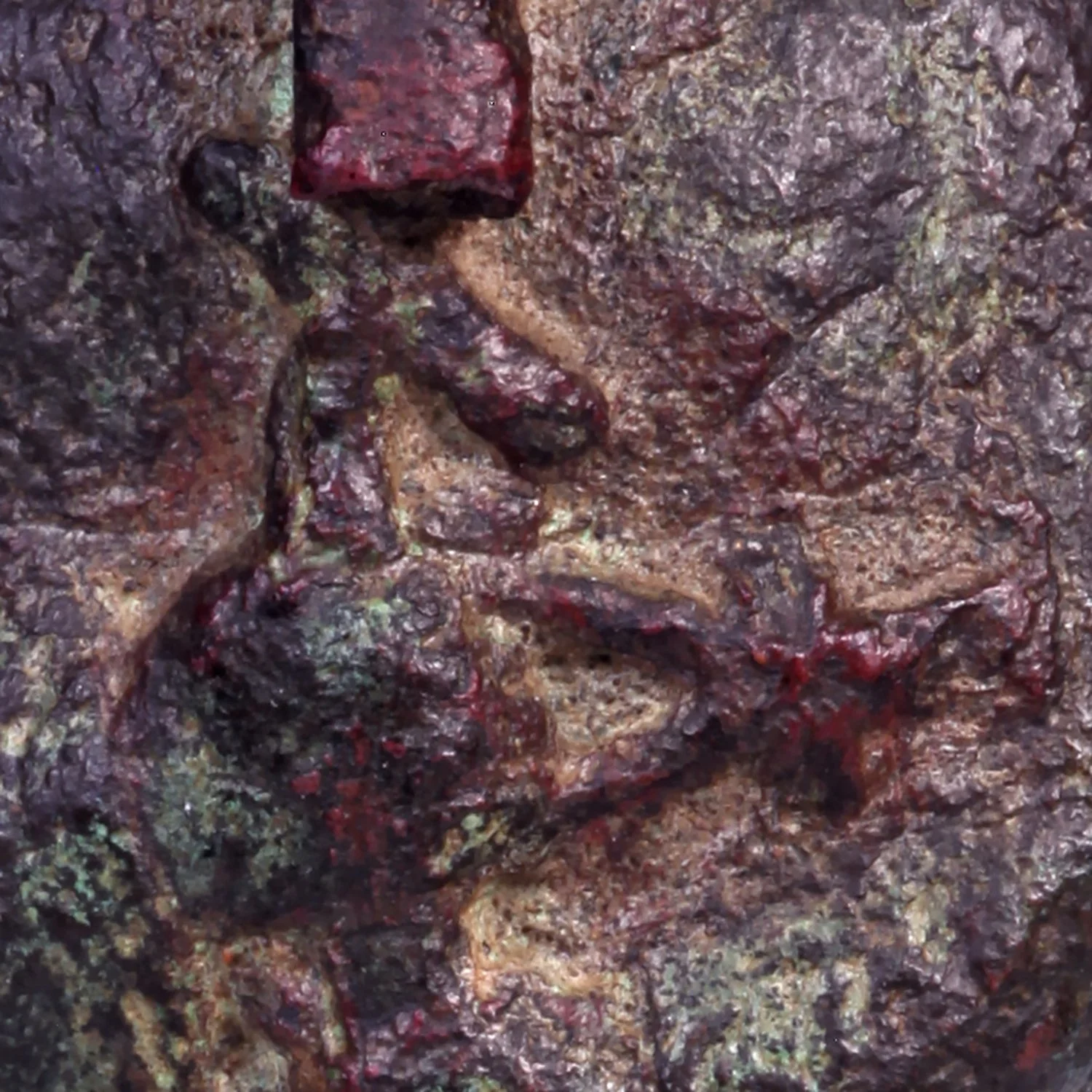
Ancient Egyptian Bronze Ptah
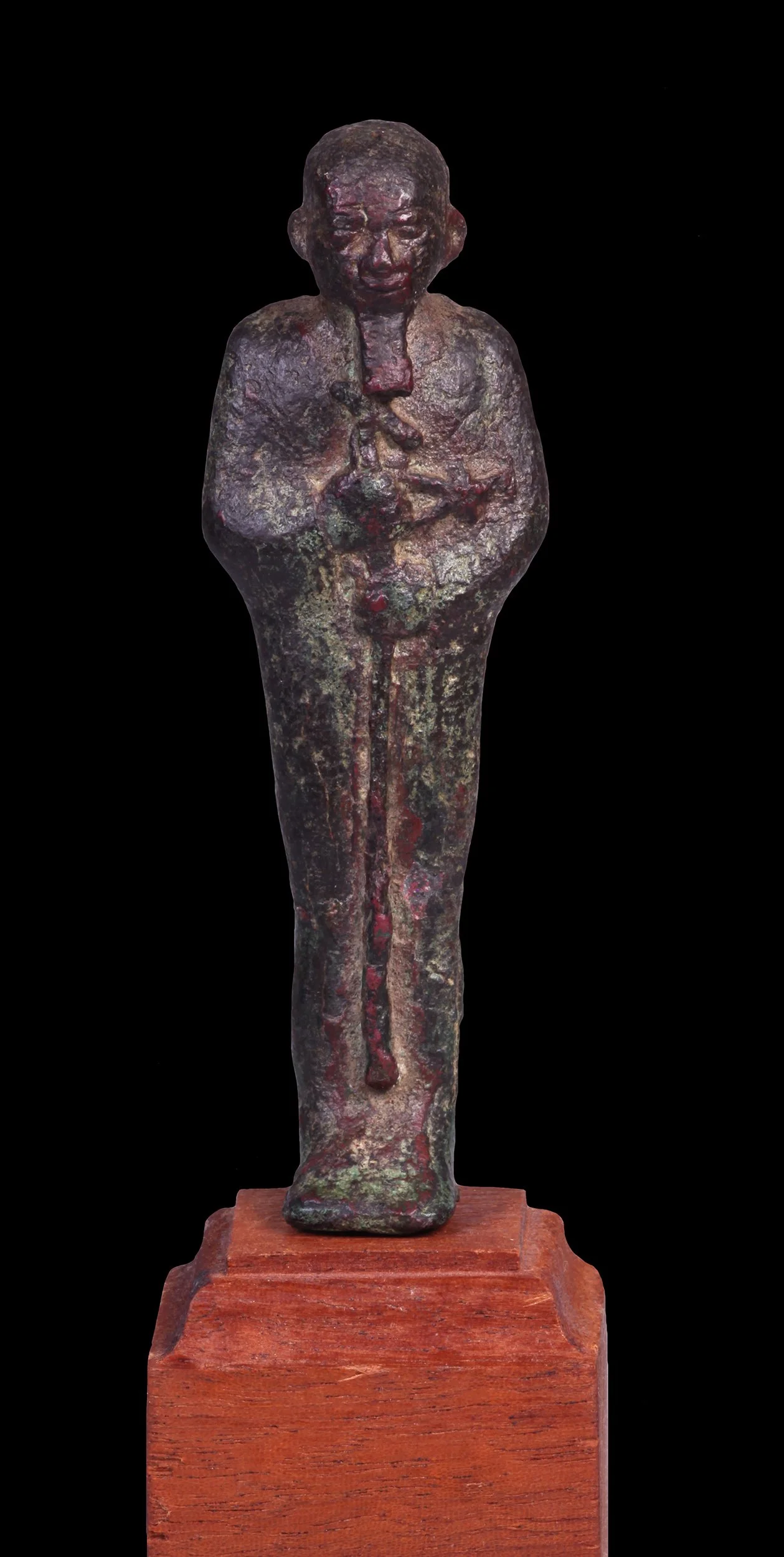
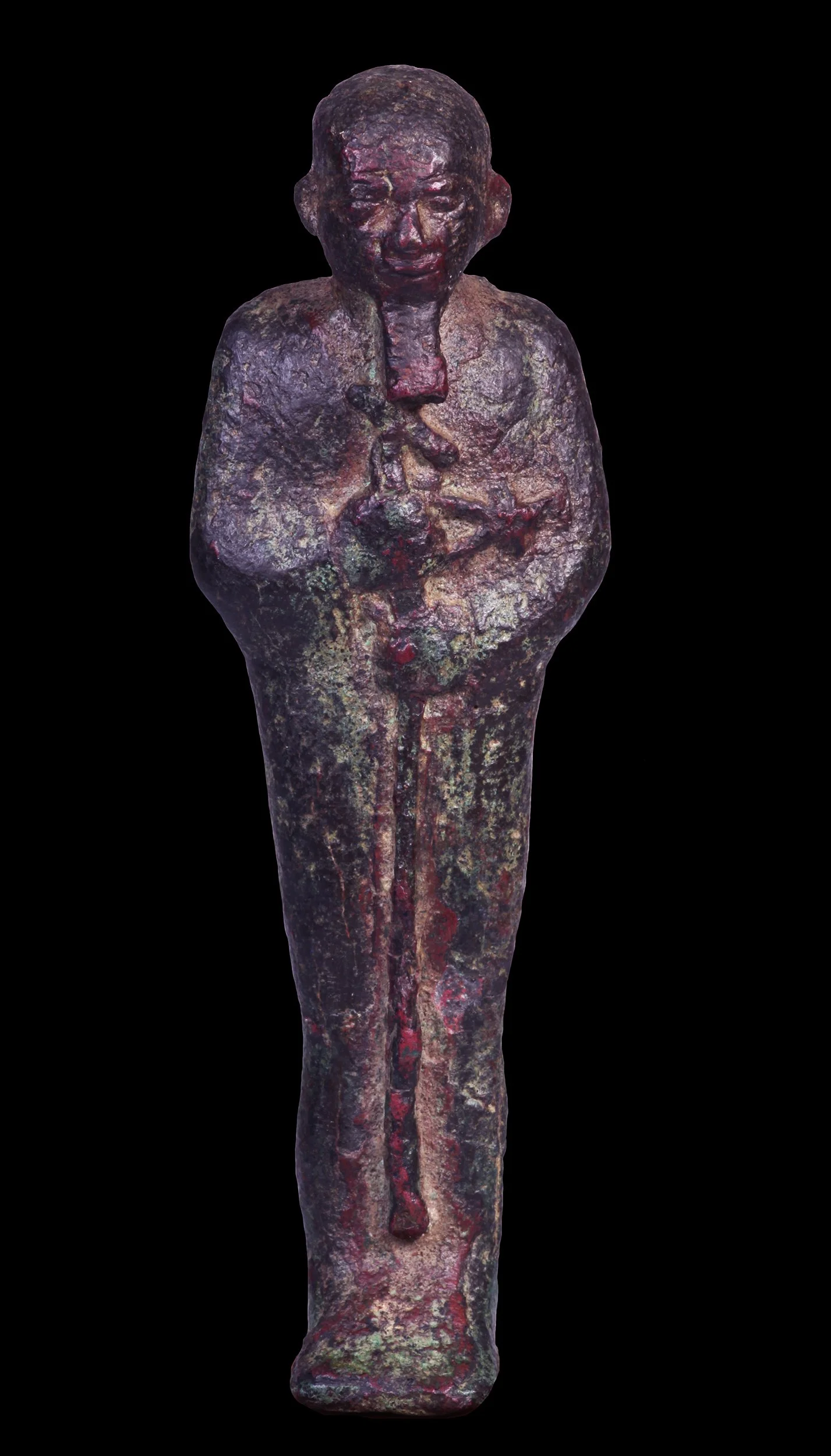
Egyptian Bronze Statuette of Ptah.
A bronze statuette depicting the Egyptian god Ptah, 25th to early 26th Dynasty, circa 750-600 B.C.
Standing mummiform and wearing a tight-fitting skullcap and wide royal beard. The god holds the was-sceptre, symbolising power, and the ankh, symbolising life.
Ptah, the great creator-god, was believed to have dreamt creation in his heart and given it life with his breath. His attributes illustrate this demiurgic role. He was the patron of craftsmen and architects and was considered to be the Lord of Truth and Master of Justice, listening to the prayers of individual worshippers and interceding in their favour. Originally worshipped in Memphis, his cult spread across Egypt when the city became the capital of the Old Kingdom. Pharaohs were often coronated in his temple. In fact, Ptah's importance was such that he partly gave his name to Egypt. Indeed, Memphis was originally called Hut-ka-ptah ("house of the soul of Ptah"), which was pronounced Aegyptos in Greek, a name which would later apply to the entire country.
Size: 11,5 cm ( with stand 15,5 cm)
Period: 25th to early 26th Dynasty, circa 750-600 B.C.
material: Bronze
Condition: Repaired at ankles
Provenance: Dutch collection 1980’s, Estate sale The Netherlands
Price: € 2.500,—