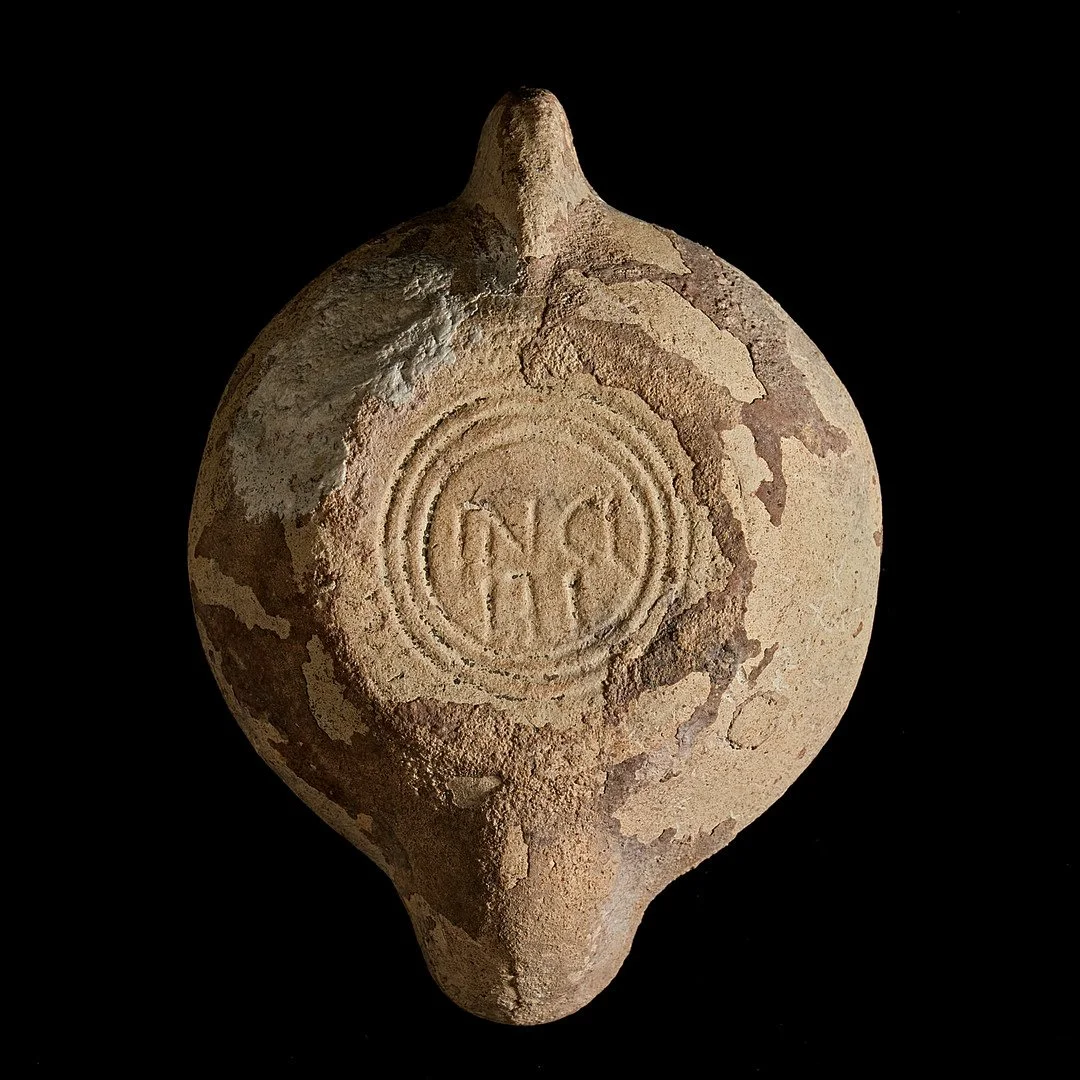
Oil Lamp 002
Size: 12 x 9 cm
Period: Egypt/Roman, 50- 200 AD
Condition: Slightly worn
Provenance: Collection Tyko Ringblom (1923-2018).
Price € 200,—
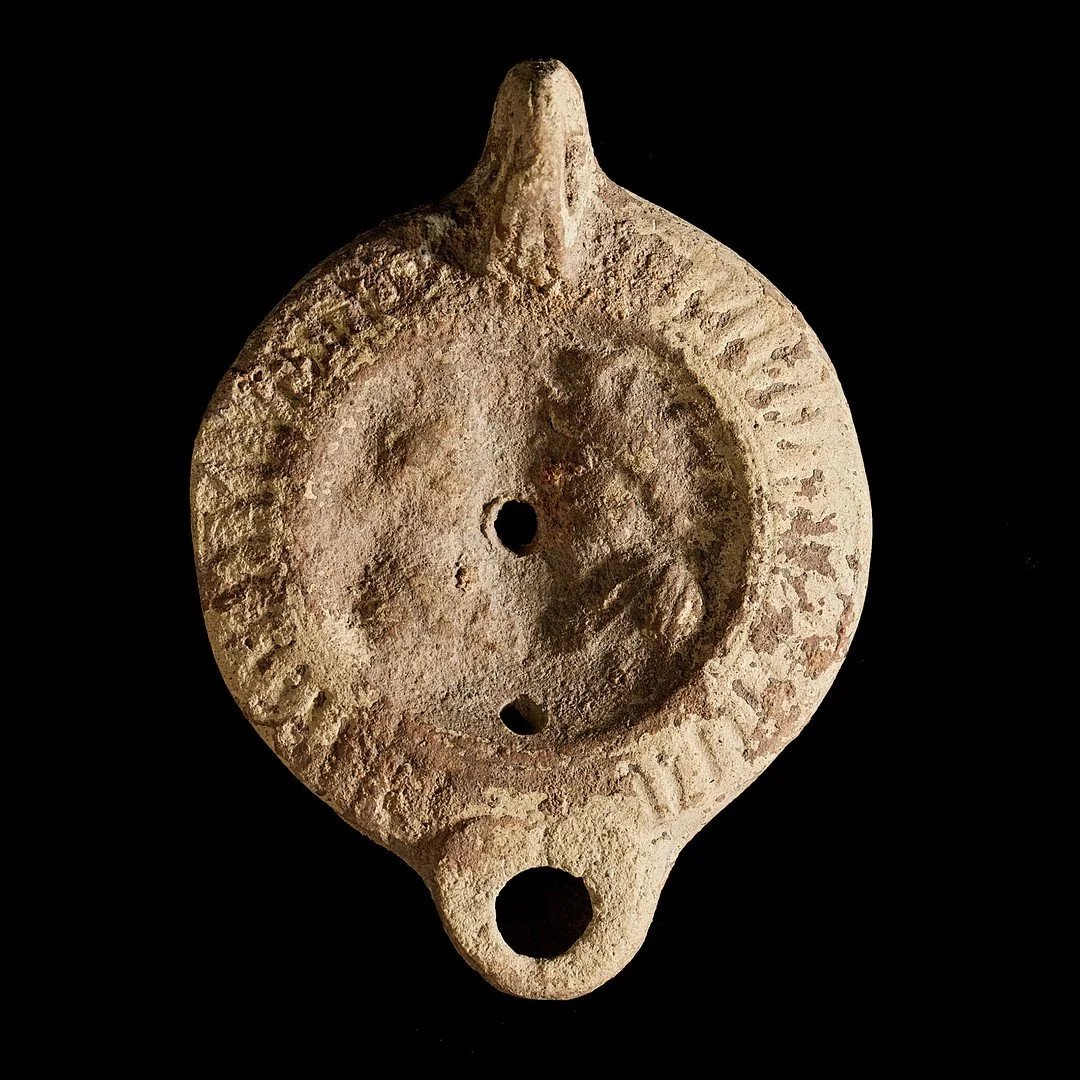
Roman Oil Lamp with Isis and Serapis
This Roman oil lamp is made of light buff terracotta and dates to the early Imperial period, when molded ceramic lamps were widely produced and distributed throughout the Roman Empire. The lamp has a rounded body with a short wick nozzle at the top, a central filling hole for olive oil, and a pierced lug at the rear for suspension or handling. Traces of blackening around the nozzle show that the lamp was used in antiquity.
The discus is decorated with a worn but still legible religious scene depicting the Egyptian deities Isis and Serapis, one of the most important divine pairs in the Roman world. Although erosion has softened the relief, two facing busts can be distinguished. On the right is Serapis, recognizable by the remains of his modius (a cylindrical grain-measure crown) and the broad, bearded facial outline typical of this god. On the left is Isis, whose veiled head and draped mantle form a softer, sloping silhouette. The two deities are shown close together, emphasizing their complementary roles.
Isis and Serapis were associated with protection, healing, fertility, and salvation, and their cult was especially popular among merchants, sailors, and urban households. Lamps bearing their images were not merely decorative: they functioned as objects of devotion, allowing the light of the flame to shine beneath the gods’ gaze and symbolically invoke their presence within the home.
The surrounding molded border frames the sacred image, while the functional elements of the lamp—nozzle, filling hole, and air vent, integrate the divine imagery into an everyday object. This lamp thus illustrates how religious belief, daily life, and material culture were closely intertwined in the Roman world, transforming a simple lighting device into a small household shrine.