Oil Lamp 007
Size: 8,4 x 5,5 cm
Period: Roman, c. 100- 300 AD
Condition: Slightly worn
Provenance: Collection Tyko Ringblom (1923-2018).
Price € 125,—
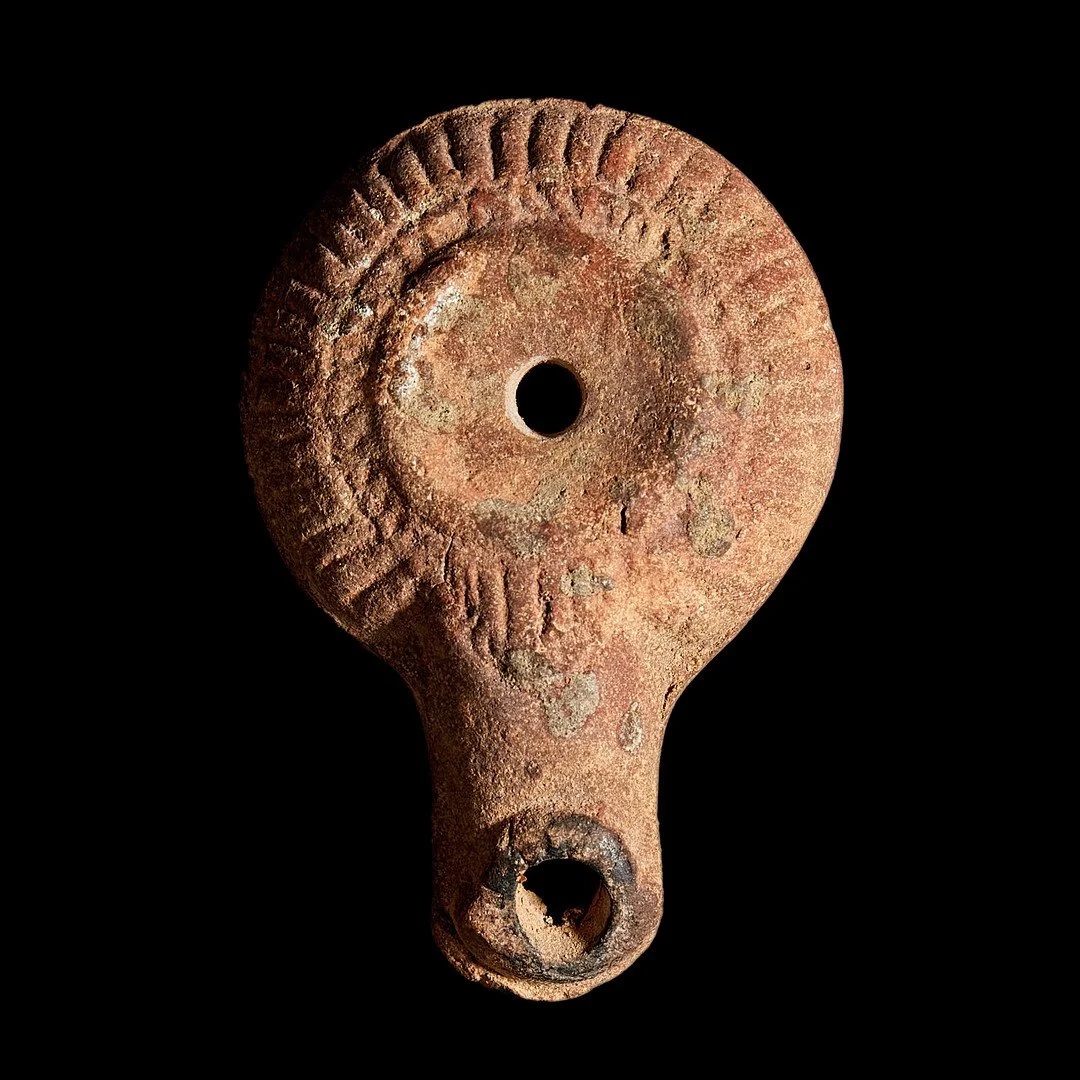
Ancient Roman terracotta oil lamp
A Roman Imperial type oil lamp, a "Samaritan Type," dating from the 1st to 3rd century AD.
The lamp is made from fired clay (terracotta) with a reddish-orange hue and exhibits signs of age, including earthly encrustations and some burn marks around the wick hole. Traces of a darker slip coating may be present in protected crevices.
It has a rounded, pear-shaped or ovoid body that tapers to a short, rounded nozzle at the front. The top of the lamp features a large, concave central area called the discus and a surrounding flat shoulder. The base is simple, likely a plain flat surface or a ring base. There is no handle.
The shoulder is decorated with a band of simple, radiating lines or linear patterns (sometimes referred to as a "ladder pattern"). The discus is plain but framed by one or more raised, concentric circles.
A single, circular filling hole is located in the center of the discus for adding fuel (typically olive oil), and a hole at the end of the nozzle accommodates a wick (made of linen or plant fibers). The charring on the nozzle indicates it was used historically.
his style of lamp was mold-made, allowing for mass production and widespread distribution across the Roman Empire. They were essential items for daily life, providing portable artificial light in homes and public spaces, and were also used for religious ceremonies and placed in burials to light the way for the deceased.