Oil Lamp 008
Size: 10,4 x 7,3 cm
Period: Roman, Imperial Period, c. 100 - 200 AD
Condition: Slightly worn
Provenance: Collection Bjarte Rekdal (b 1935)
The items were acquired in Tunisia between 1965-1966
Price € 275,—
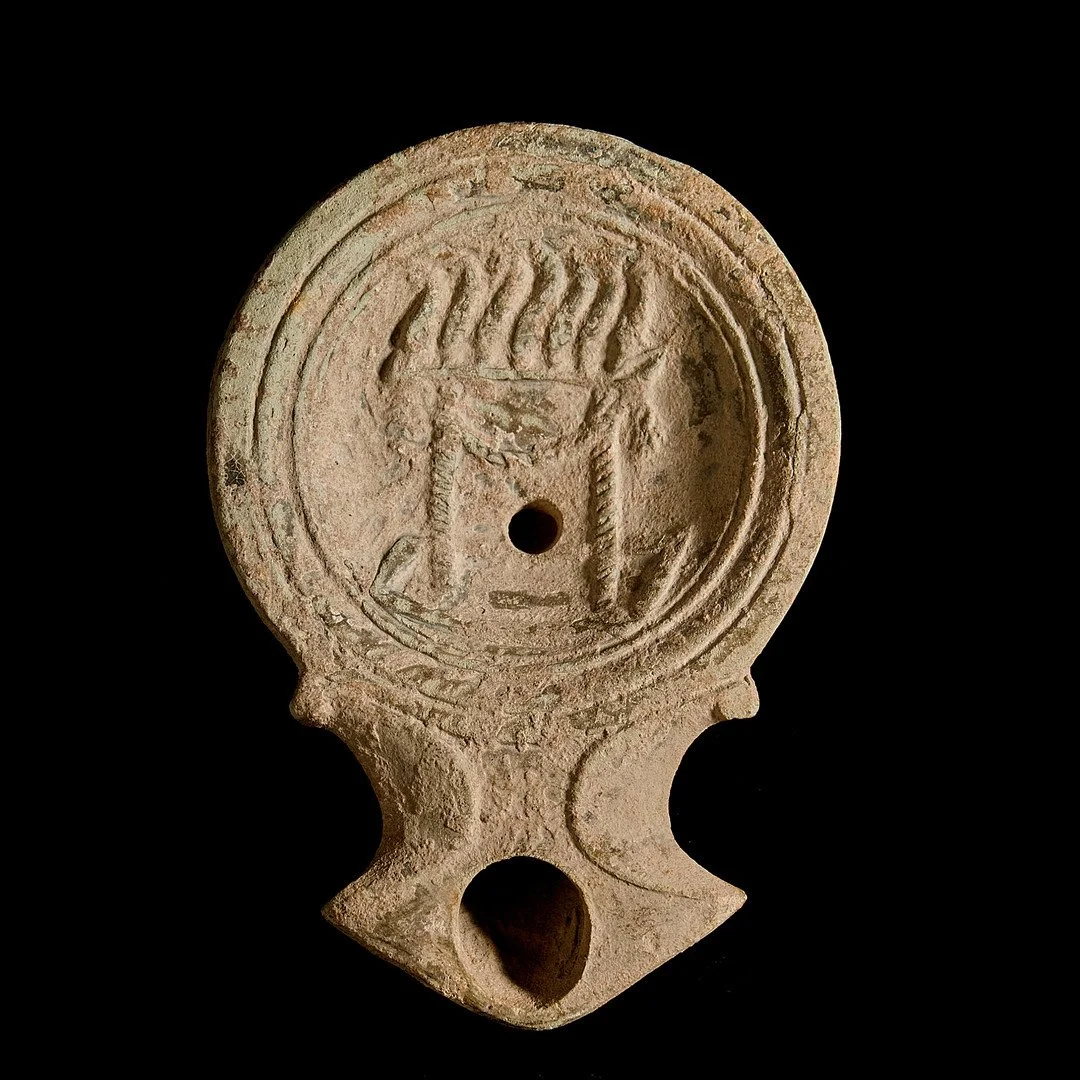
Terracotta Oil Lamp with Altar Motif
The lamp features a rounded, closed body that tapers into a short, rounded nozzle, with no handle present. The concave central area, known as the discus, is decorated in high relief with a detailed scene of a flaming altar (cista or ara). Wavy lines above the structure represent the fire or smoke. To the right of the altar, a caduceus (the winged staff associated with the god Mercury) is visible. These motifs are contained within a raised concentric circle, while a band of simple, radiating lines encircles the shoulder of the lamp. A single filling hole is centrally located in the discus to add oil (typically olive oil), and a larger wick hole is situated at the nozzle.
The production technique, using plaster molds, allowed for the mass creation of these lamps with diverse decorative themes, which ranged from deities and mythological scenes to gladiatorial combat and everyday objects. The image of an altar suggests a religious context; lamps were frequently dedicated as votive offerings at temples or shrines. They were also commonly placed in graves to light the way for the deceased in the afterlife.
This mold-made ceramic oil lamp provides a glimpse into the daily life and religious practices of the Roman Empire. Roman buildings often lacked large windows, making artificial light a necessity, and simple terracotta lamps were ubiquitous items used by all strata of society.