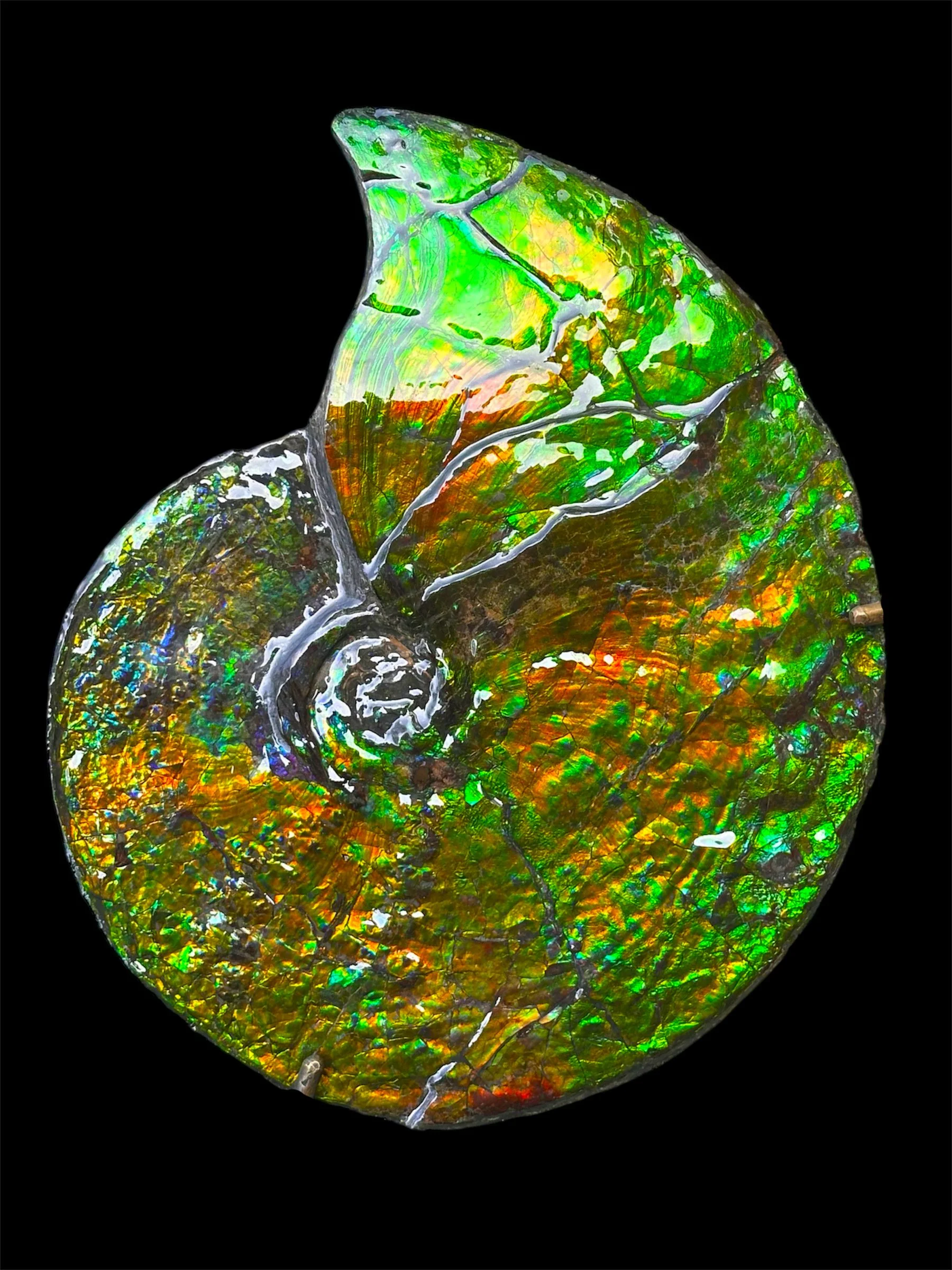
Ammolite (Fossil Ammonite Shell)
Late Cretaceous Period, approximately 70–75 million years ago
This specimen is a large fossil ammonite shell preserved as Ammolite, a rare biogenic gemstone formed from the aragonite layers of extinct marine cephalopods (Ammonoidea). Its distinctive iridescence, known as play-of-color, is produced by the diffraction and interference of light within exceptionally well-preserved, microscopically thin aragonite platelets. Variations in platelet thickness and orientation generate an intense, angle-dependent spectrum dominated by vivid greens, golds, and ambers, with localized flashes of red and secondary hues.
The fossil retains its original spiral morphology, with visible suture lines and growth structures characteristic of ammonites. Natural fracturing and mineral-filled seams reflect post-depositional geological processes and contribute to the characteristic mosaic texture of high-quality Ammolite.
Ammolite occurs in highly restricted geological settings and is found almost exclusively within the Bearpaw Formation of southern Alberta, Canada, deposited in a shallow inland sea during the Late Cretaceous. The exceptional brightness, chromatic range, and surface continuity of iridescence observed in this specimen indicate an unusually high degree of aragonite preservation. Specimens of this size and optical quality are uncommon and of notable scientific, educational, and curatorial significance.
Where Does Ammolite Come From?
The majority of the ammolite on the market today comes from two major mining operations. One of them claims to produce 90 percent of the ammolite circulating today. Gem-quality ammolite is mined almost exclusively from the Late Cretaceous (~70 million years) aged Bearpaw Formation, situated near the St. Mary River in southwestern Alberta, Canada. The Bearpaw Shale is a product of the formation of volcanic activity that spawned the Rocky Mountains. A series of major eruptions filled the shallow Bearpaw sea with an incredible amount of volcanic ash that settled, burying all sea-life therein so completely that it was nearly impregnable by oxygen or water. This covering was so complete that the aragonite in the ammolite was unable to shift to its chemically stable state of calcite. It is the microfracturing of the aragonite that creates its iridescence and makes ammolite such a prized collector's item.
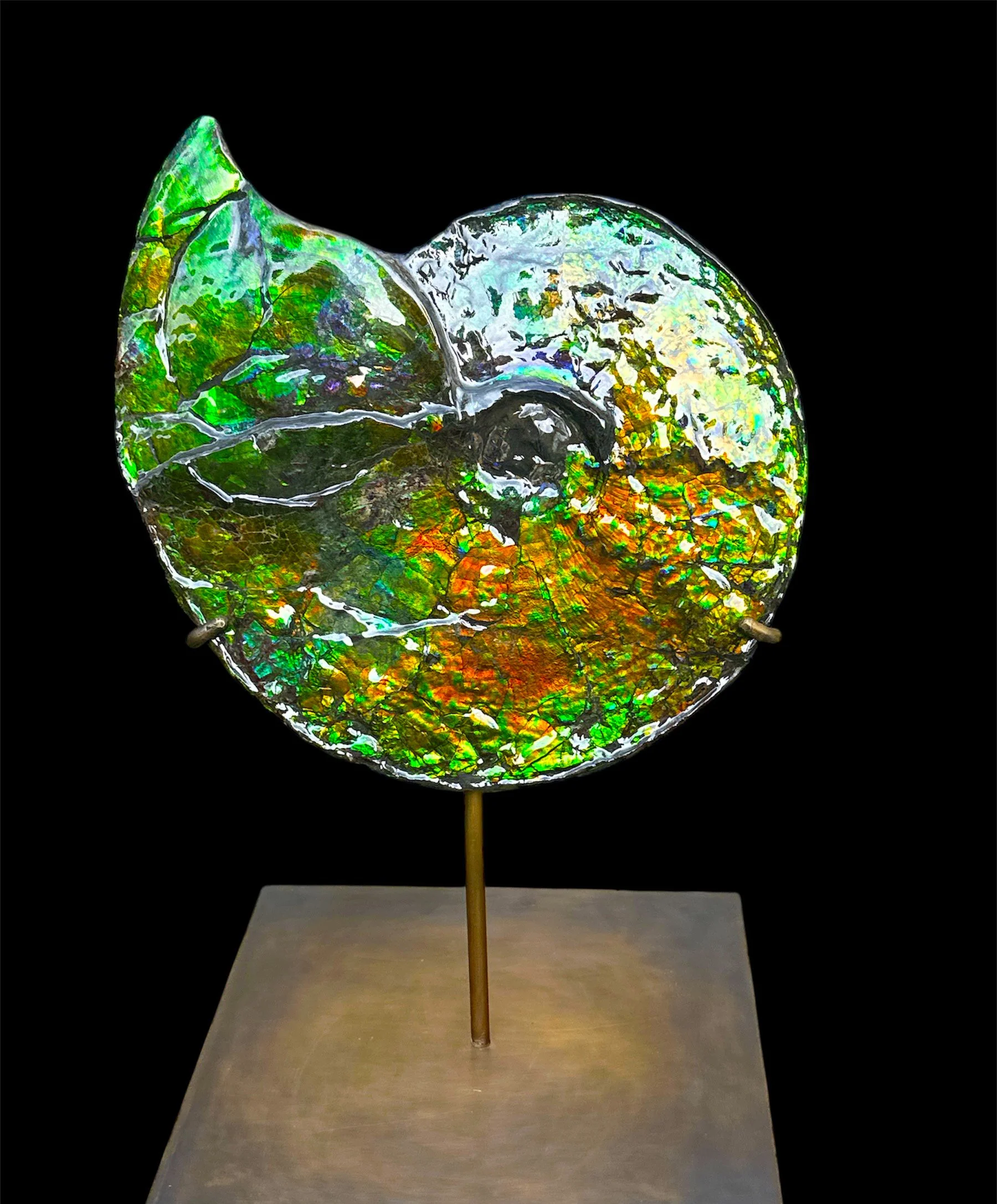
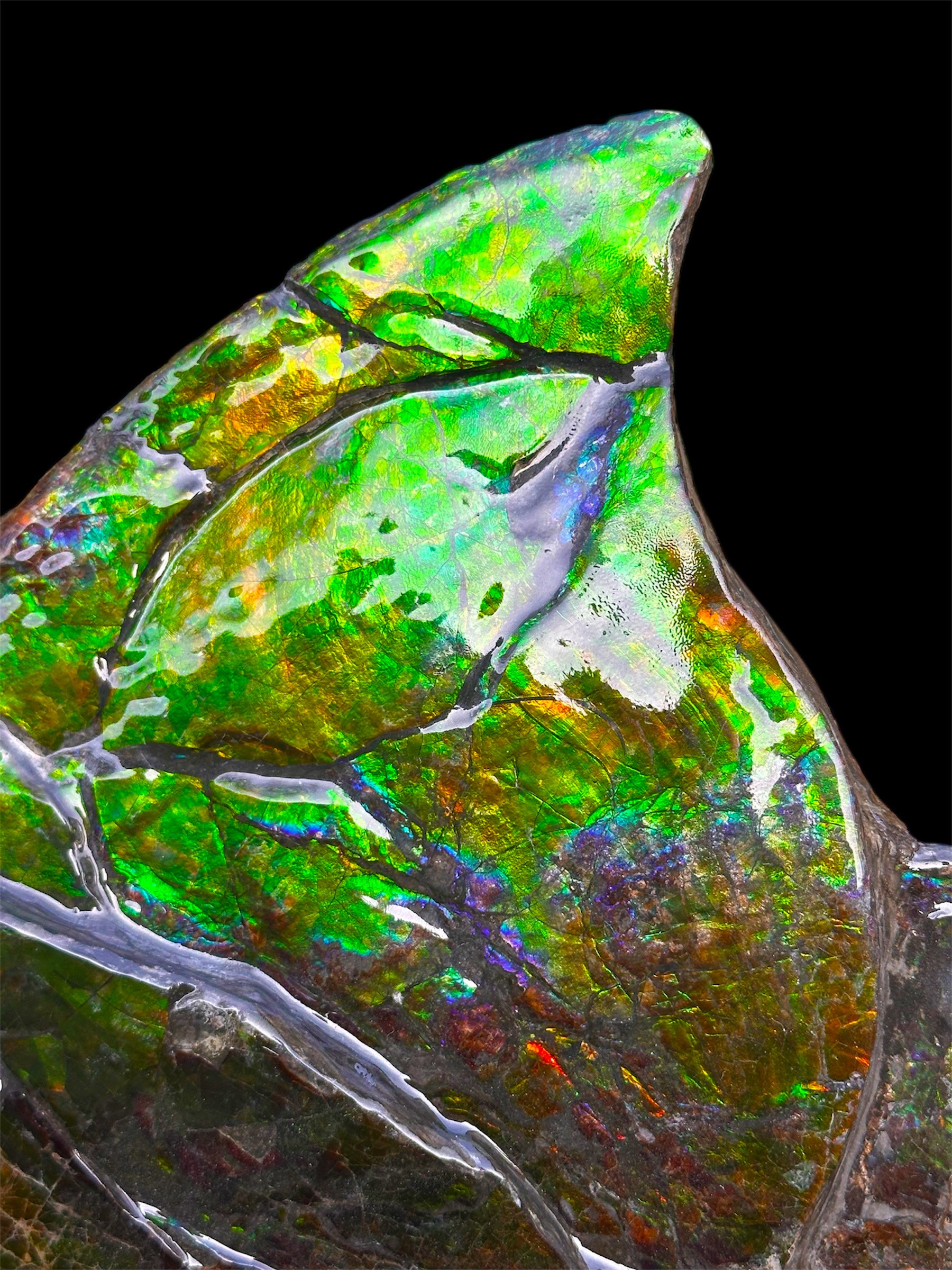
An Opalescent rainbow in vivid shades of green, red, orange, yellow, blue and violet, ammolite is among the rareest of gems.
Formed under geological processes during fossilization, ammolite is unique to Alberta, northeast of the Rocky Mountains.
Named “Amon’s Horns” for the ancient Egyptian god of life and procreation known for his rams horns, ammonites have been treasured by cultures around the world for thousands of years.
This execeptional, shimmering specimen presents every color in the rainbow.
Origin: Southern Alberta, Bearpaw Formation, Canada
Dimensions: approximately 14.5 inches ( 36,8 cm)
Material: Fossilized ammonite shell (aragonite-based Ammolite)
Price Price on Request