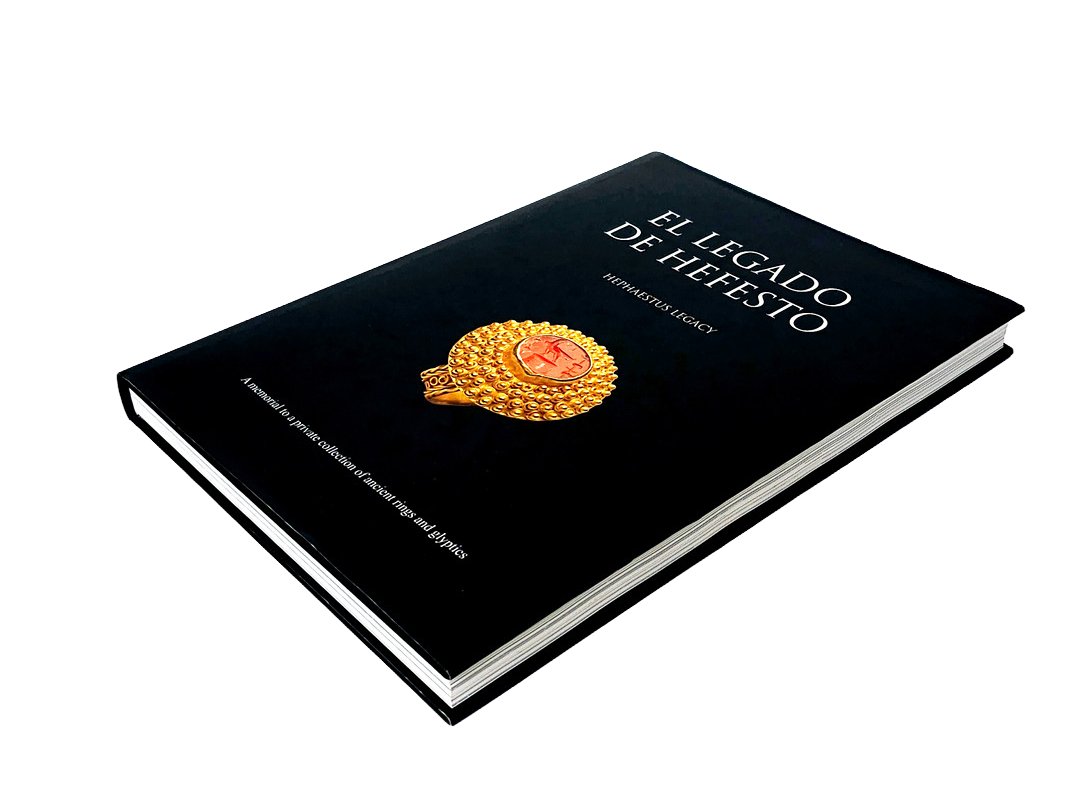
SPECIAL ACQUISITION HIGHLIGHT: THE HEPHAESTUS LEGACY
An uncirculated, factory-sealed masterpiece of ancient glyptic art reference.
El Legado de Hefesto - Hephaestus Legacy: A memorial to a private collection of ancient rings and glyptics
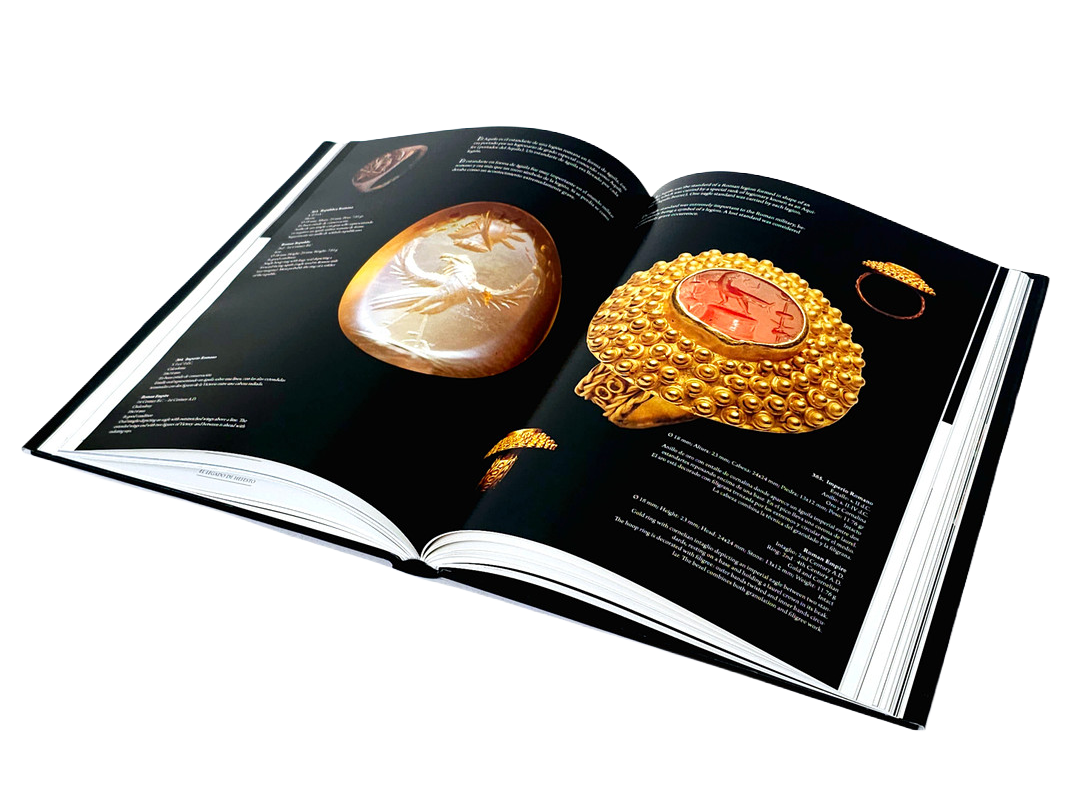
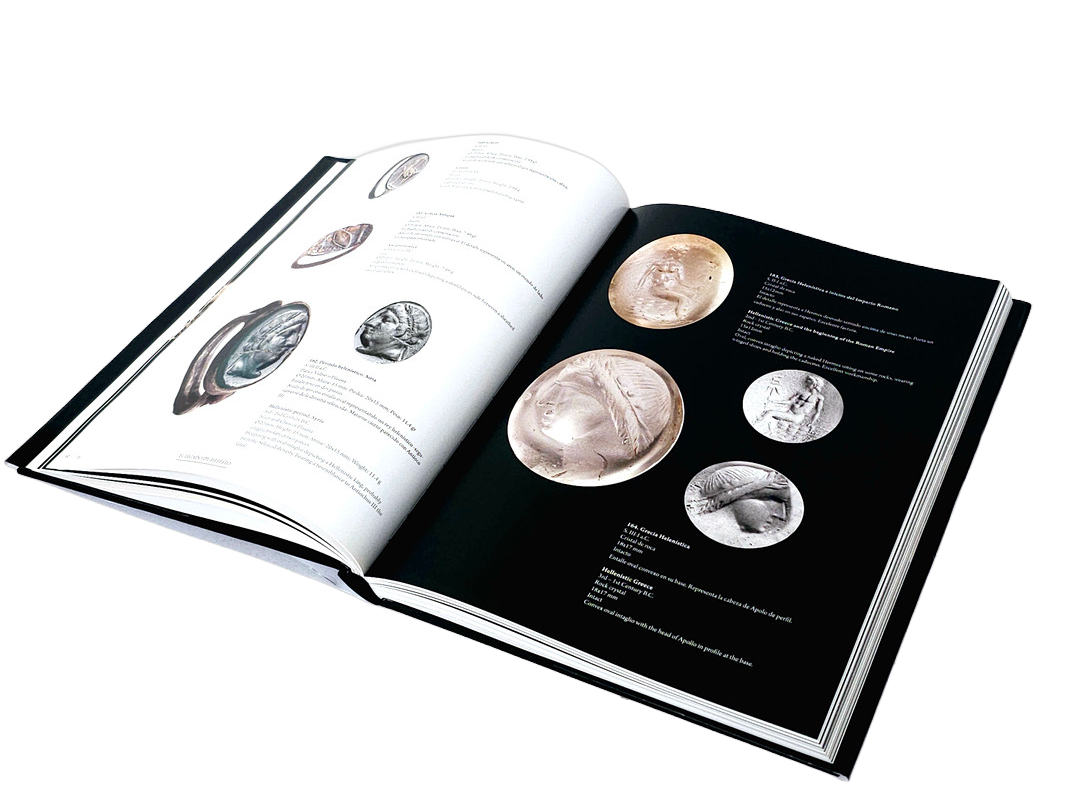
We are pleased to present a rare opportunity for collectors, institutions, and connoisseurs of ancient art. El Legado de Hefesto is widely regarded as one of the most definitive, visually arresting reference catalogs dedicated to the study of ancient Greek, Roman, Egyptian, and Byzantine rings, cameos, and intaglios.
Commissioned as a limited-run monument to an elite private collection compiled over eight decades, this highly sought-after volume provides invaluable diagnostic data. It is an indispensable tool for authenticating, cataloging, and tracing the provenance of classical glyptic arts.
Gallery Provenance Note:
While used, heavily handled copies of this out-of-print title occasionally surface within the secondary market, this specific offering is an uncirculated, archival-grade copy. Preserved perfectly inside its original, unopened factory seal, it represents a flawless addition to a premier curatorial or private library.
Authors: Jaume Bagot Peix, Oriol Carreras, Marc Sarda Bagot
Publisher: J. Bagot Arqueología (Barcelona, 2012)
Condition: Mint / Factory Sealed. Original publisher's shrink wrap entirely intact.
Specifications: Deluxe large-format hardcover (33.7 x 24.7 cm), bilingual text (English & Spanish), featuring high-fidelity photography of over 700 ancient masterworks.
Publisher : J. Bagot
Language : English, Spanish
Hardcover : 270 pages
Condition: New, Mint condition
ISBN-13 : 9788461616190
Item : Hardback
Dimensions : 33,7× 24,7 cm
Price € 200,—
Over eighty years ago a German businessman who had settled in Barcelona decided to start collecting diverse archaeological objects, focusing on those used by men and women to decorate their bodies.
Perhaps he did this by chance, or perhaps he was carried along on the wave of a fashion along with others from the enlightened classes who, from the 17th Century on, devoted themselves to collecting antique and exotic objects, often picked up on voyages to faraway lands.
These would then form part of cabinets full of curiosities, or of great collections which, together with the collections of kings and noblemen, would become what are today the greatest art museums in the world.
Years later, the grandson, following in the steps of the grandfather who had already collected more than one hundred and fifty rings, intaglios and cameos, widened and improved this collection – which he rescued from a display case in some corner of the family home - until it was twenty times its original size.
In this Collection of more than two thousand rings, intaglios and cameos, we can find pieces representative of all the cultures that flourished around the Mediterranean: work from the 6th Millennium B. C. in the Middle East, from Ancient Egypt, from Greece, pieces produced by the Phoenicians and Carthaginians, marvellous examples from a wide range of cultures from pre-Roman Europe along with a great quantity from the most magnificent era of the Roman Empire, examples from the Byzantine Empire and Medieval Europe, a selection from the Islamic World and finally, a small number of pieces from the Renaissance to the 19th Century.