Ancient Egyptian Limestone Baboon ( Toth)
Late Period 26th-31st Dynasties
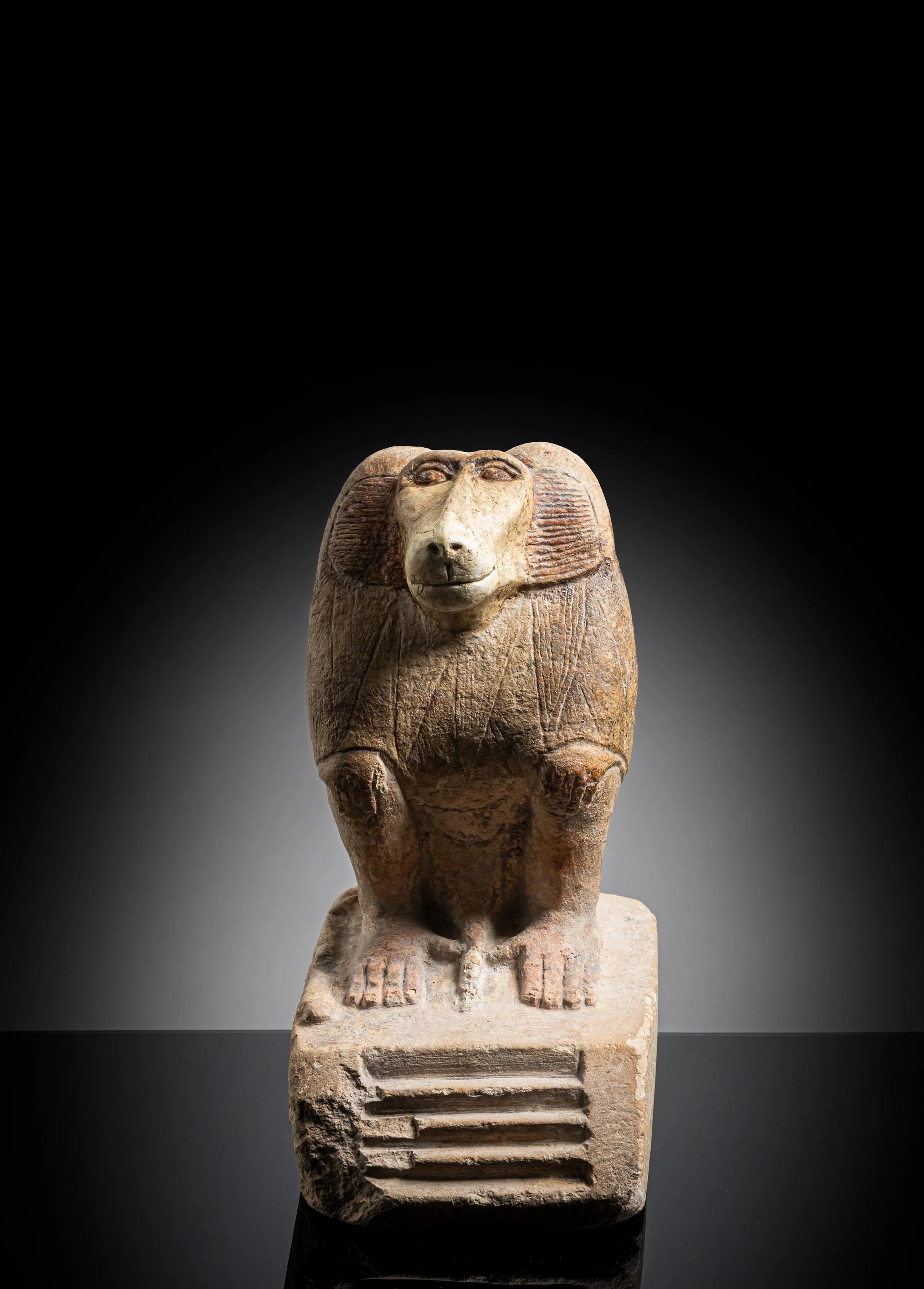
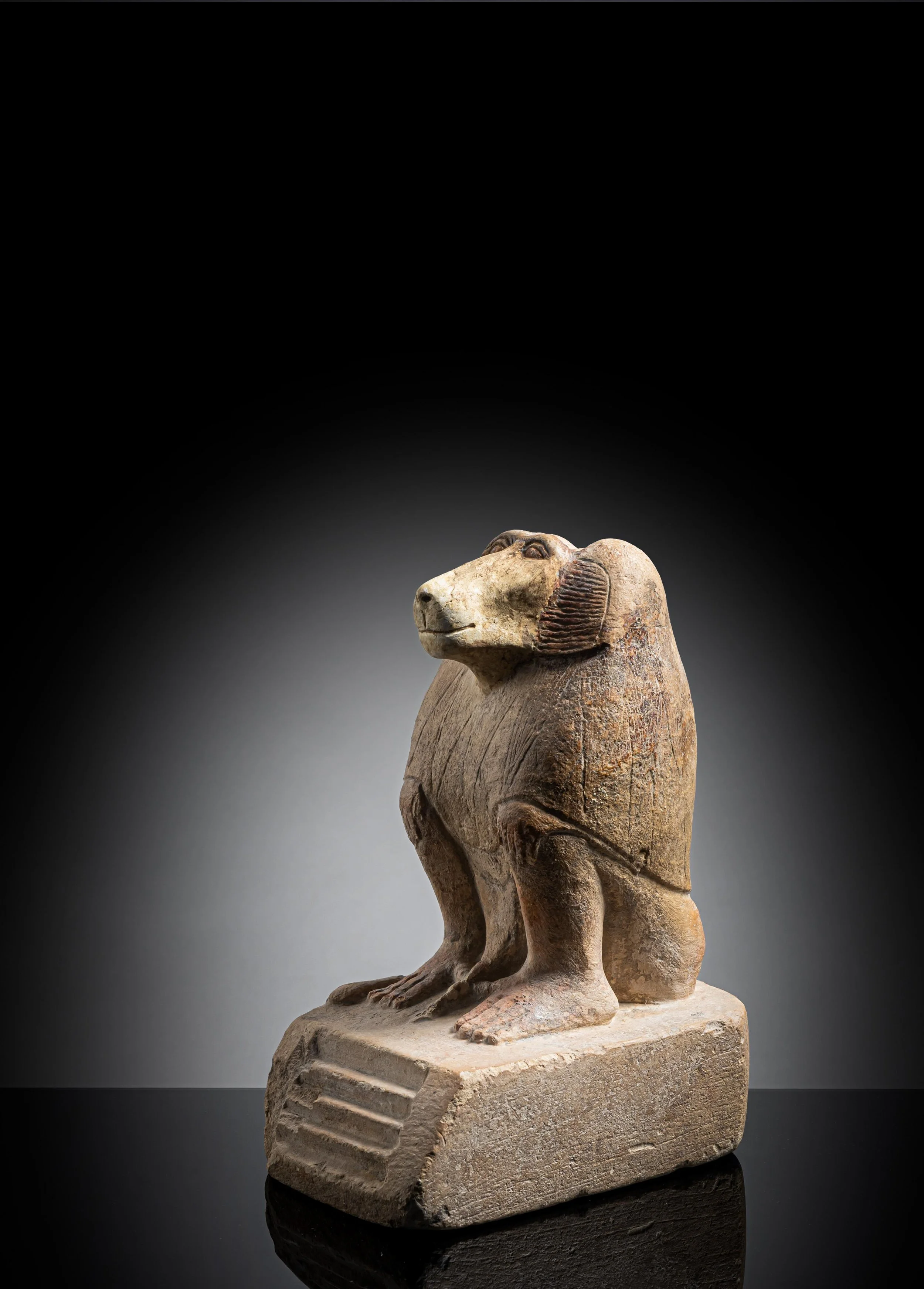
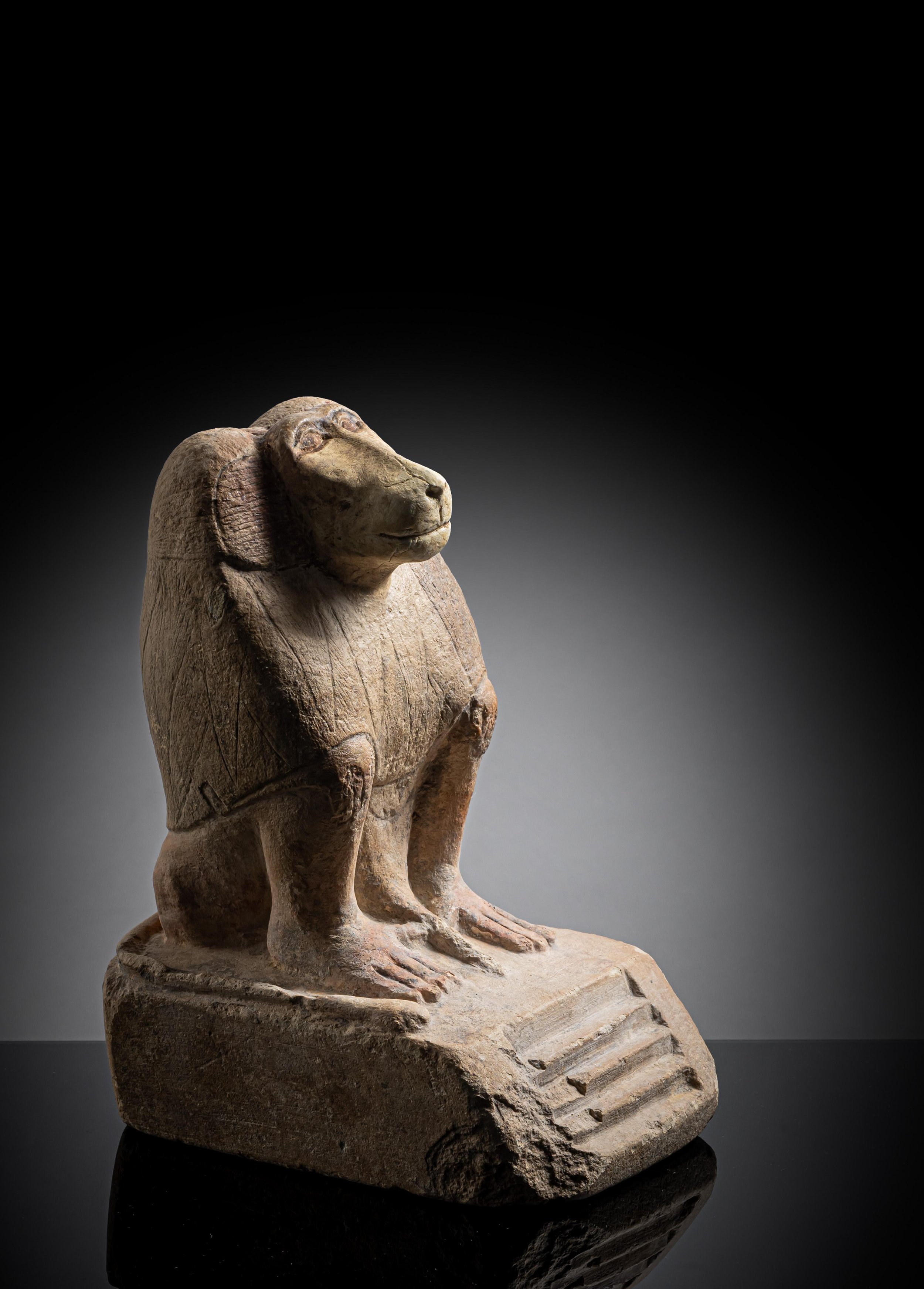
This rare, 21 cm tall Egyptian limestone sculpture depicts an adult male Hamadryas baboon expertly carved in the round. The primate sits in a classic, canonical squatting pose, resting its powerful hindquarters on a solid block base while placing its long front paws flatly upon its knees.
The piece features a remarkably rendered face, detailing a smooth muzzle, subtle facial contours, and an alert, serene expression. Framing the head is a highly stylized, cape-like mane. The sculptor captured the dense texture of the baboon's fur through clean, incised triangular patterns along the chest and mantle.
The figure sits elevated upon an integrated pedestal featuring three carved horizontal steps, symbolizing the primeval mound of creation or sacred temple architecture.
Condition
The sculpture remains in excellent, stable condition with a magnificent aged cream patina. The limestone shows minor surface pitting, edge wear, and faint abrasions consistent with ancient burial. Notably, substantial remnants of its original earthy reddish-brown pigments are beautifully preserved across the paws, muzzle, and sections of the mane, offering a striking visual link to its original polychrome appearance.
The Intellect of Thoth
In the complex ancient Egyptian pantheon, the baboon was deified as the primary animal manifestation of Thoth, the god of wisdom, science, magic, the moon, and the sacred art of writing. While often depicted as an ibis-headed human, Thoth’s baboon persona represented his role as the celestial record-keeper and patron deity of scribes. Votive statues like this were typically placed in temple sanctuaries, elite tombs, or administrative settings to invite divine protection and intellectual guidance.
Greeting the Dawn
The posture of this baboon also carries strong solar meaning. Ancient Egyptians watched wild baboons naturally bark and chatter at dawn, interpreting this behavior as a sacred act of worship directed at the rising sun god, Ra. Because of this, baboon statues became universal symbols of spiritual awareness, the regular tracking of cosmic time, and eternal rebirth out of darkness.
Size : 21 cm
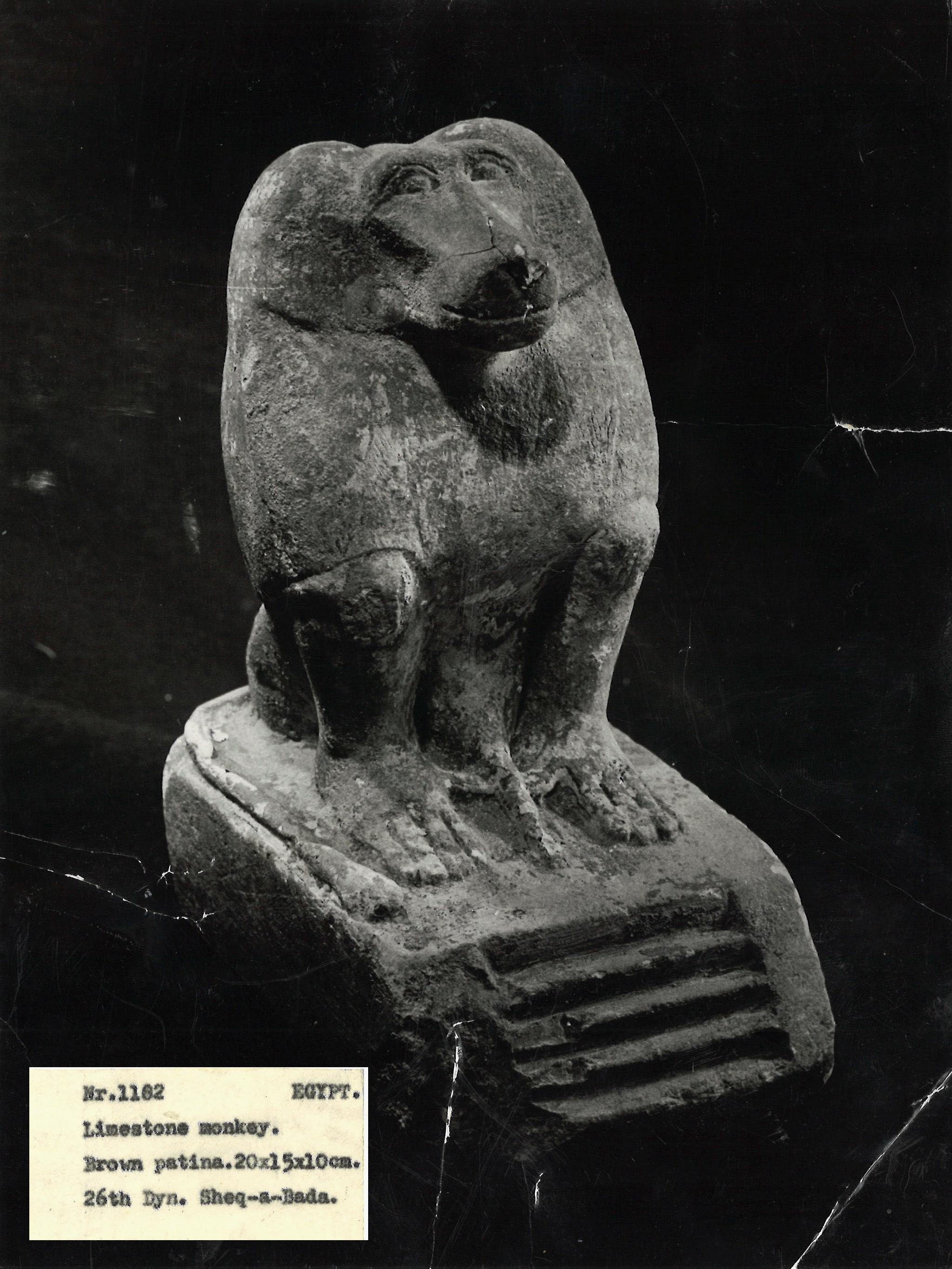
Period: 26th Dynasty, Saïte Period, c. 664–525 BC, Sheikh Abada (Sheq-a-Bada), Middle Egypt
Material: Limestone
Provenance: Private European/International Collection;in the family since the 1960s: subsequently featured in the curated selection of the Six Continents Ancient Art & Antiquities auction.
Price € 34.000,—