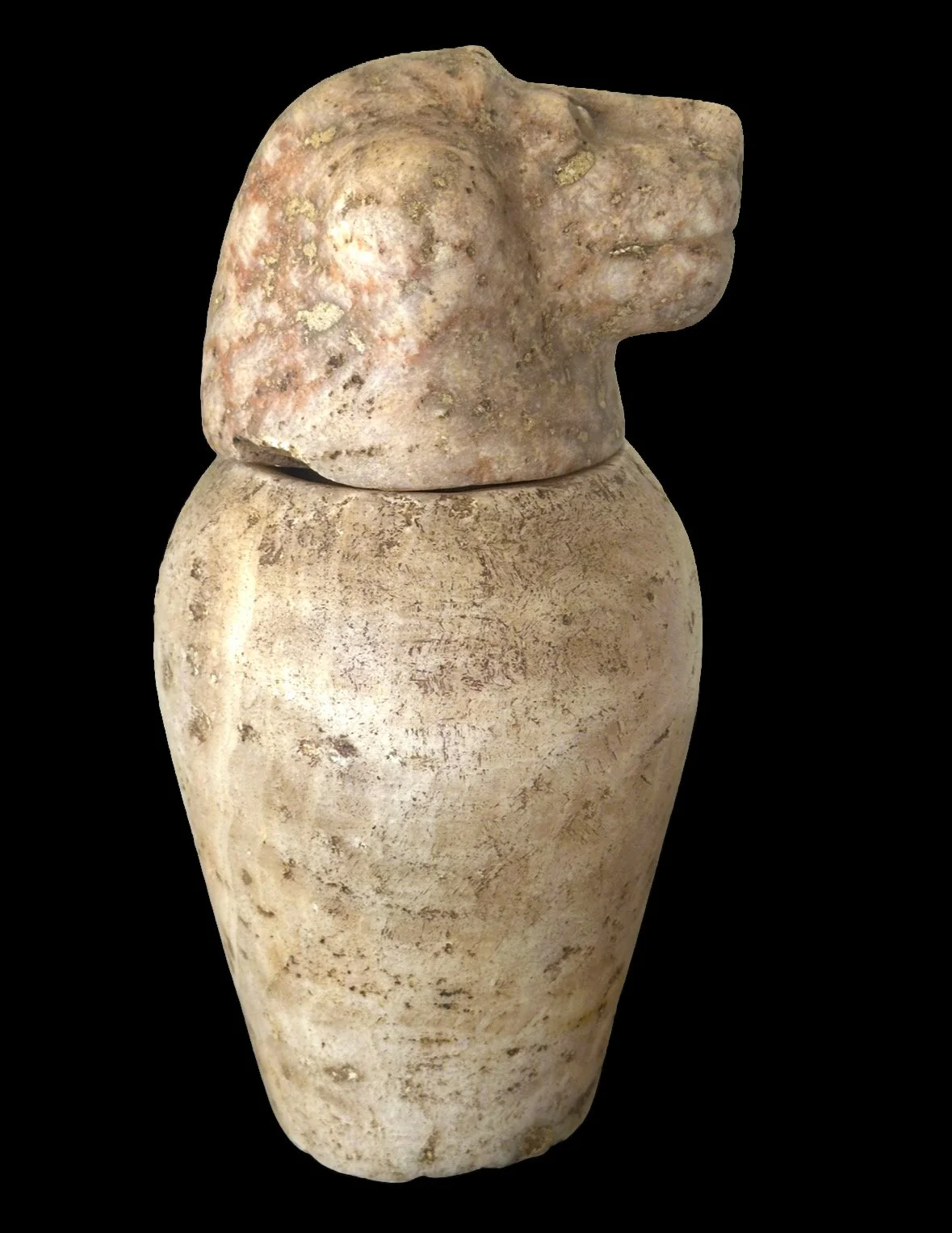
Ancient Egyptian Alabaster Canopic Vessel with the Head of Hapy
Third Intermediate Period–Late Period, circa 8th–6th century BCE
Ancient Egypt
Alabaster (calcite)
Height: 26 cm (10 ¼ in.)
Diameter: 14 cm (5 ½ in.)
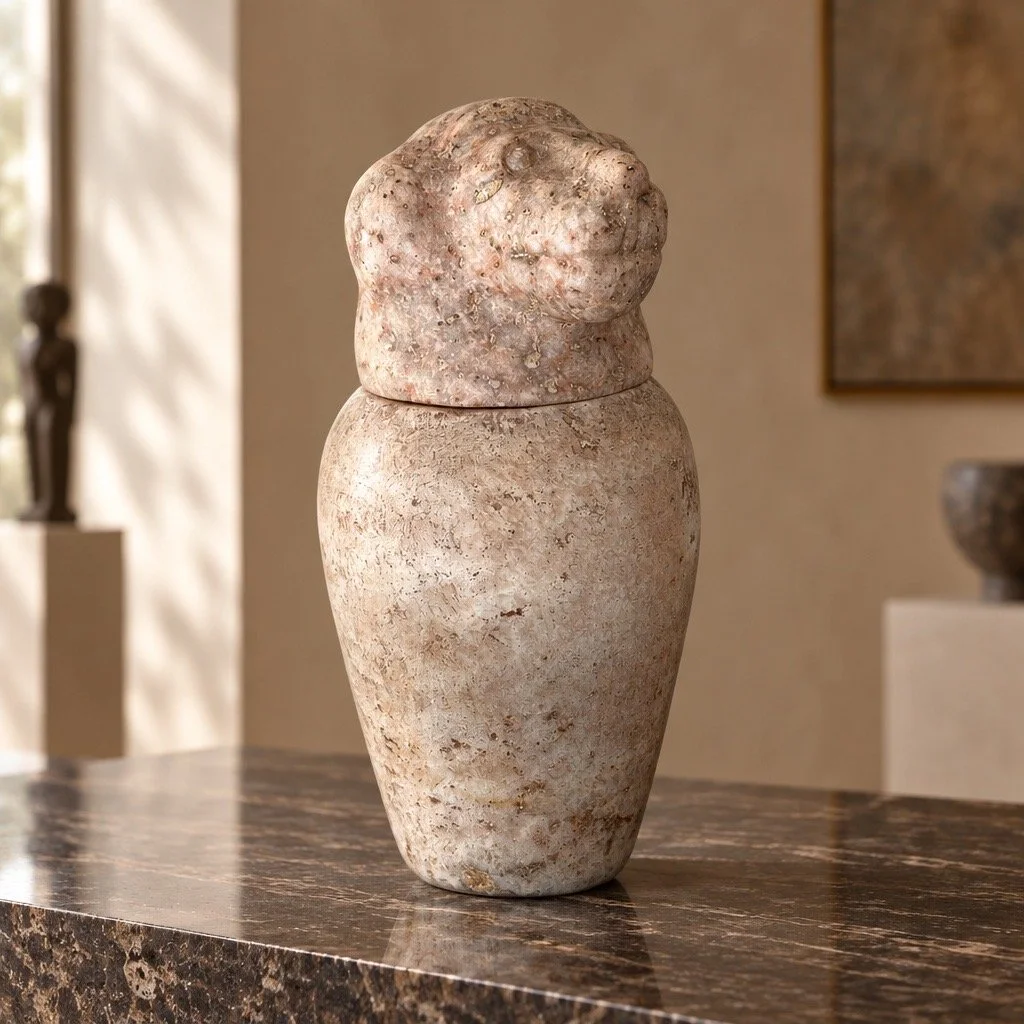
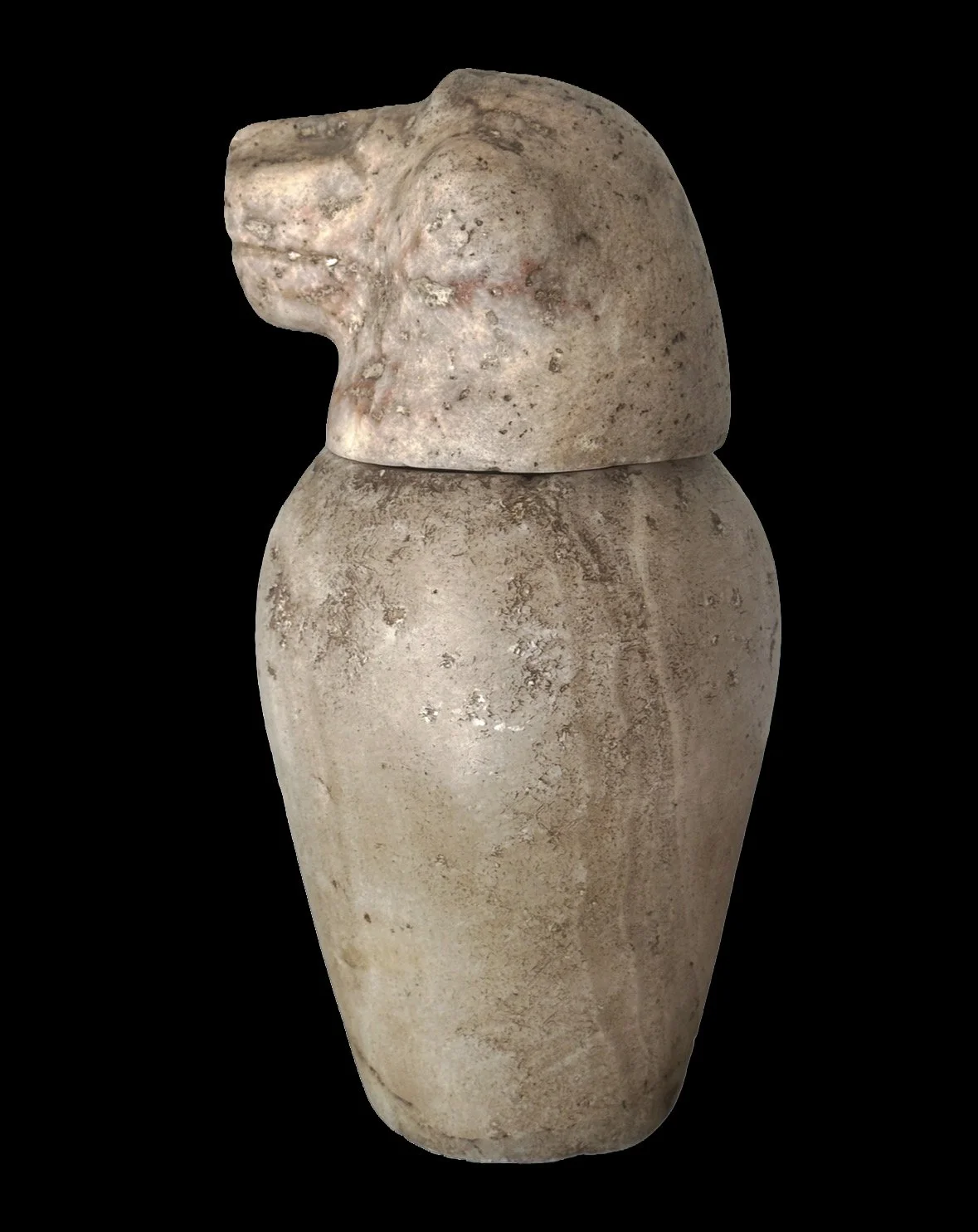
A fine ancient Egyptian canopic vessel carved from warm cream-coloured alabaster, surmounted by a sculpted lid representing Hapy (Hapi), the baboon-headed Son of Horus and divine protector of the lungs.
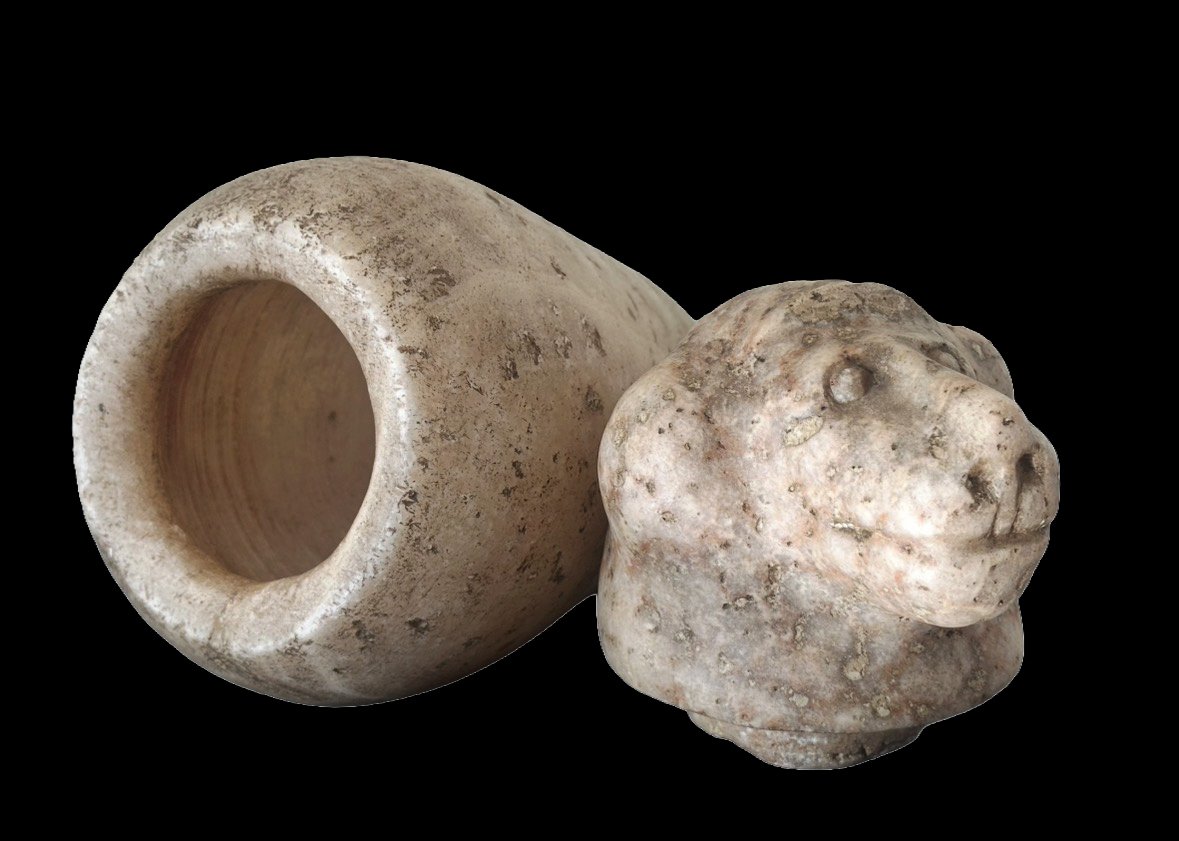
The vessel is of substantial, rounded form with a gently tapering body and broad shoulder, supporting a separately carved figural lid. The finely mottled alabaster displays natural variations of cream, beige and honey tones, with mineral inclusions and a naturally aged surface. The expressive head of Hapy is boldly modelled, with the characteristic broad muzzle and rounded features of the baboon.
The vessel retains extensive ancient working marks within its hollow interior, preserving evidence of the original stone-working process. The body was excavated from the solid alabaster and carefully hollowed using ancient drilling, cutting and abrasive techniques, leaving visible longitudinal and concentric traces on the interior surface. These manufacturing marks are an important feature of the object's material character and provide insight into the craftsmanship employed in the production of Egyptian stone vessels.
Canopic vessels were an essential part of ancient Egyptian funerary practice. During mummification, the internal organs of the deceased were removed, preserved separately and placed under the protection of the Four Sons of Horus. Imsety protected the liver, Hapy the lungs, Duamutef the stomach and Qebehsenuef the intestines. Their images on the lids of canopic vessels served both a practical funerary purpose and a powerful religious function, ensuring the protection and preservation of the deceased's organs for the afterlife.
Hapy, identified by his baboon head, was specifically associated with the protection of the lungs. His presence on the present vessel therefore identifies its traditional funerary role and places the object within the long-standing Egyptian tradition of divine guardianship of the deceased.
The combination of finely worked alabaster, substantial hollowed construction, preserved interior tool marks and the sculptural representation of Hapy makes this an evocative example of ancient Egyptian funerary craftsmanship.
Provenance
Formerly in the collection of J. and I. Ziplaa, The Netherlands.
Acquired at an estate sale.
Condition
Surface wear and natural mineral inclusions consistent with age and the character of the alabaster. The interior retains extensive ancient working marks from the hollowing process.
Price € 6.800,—