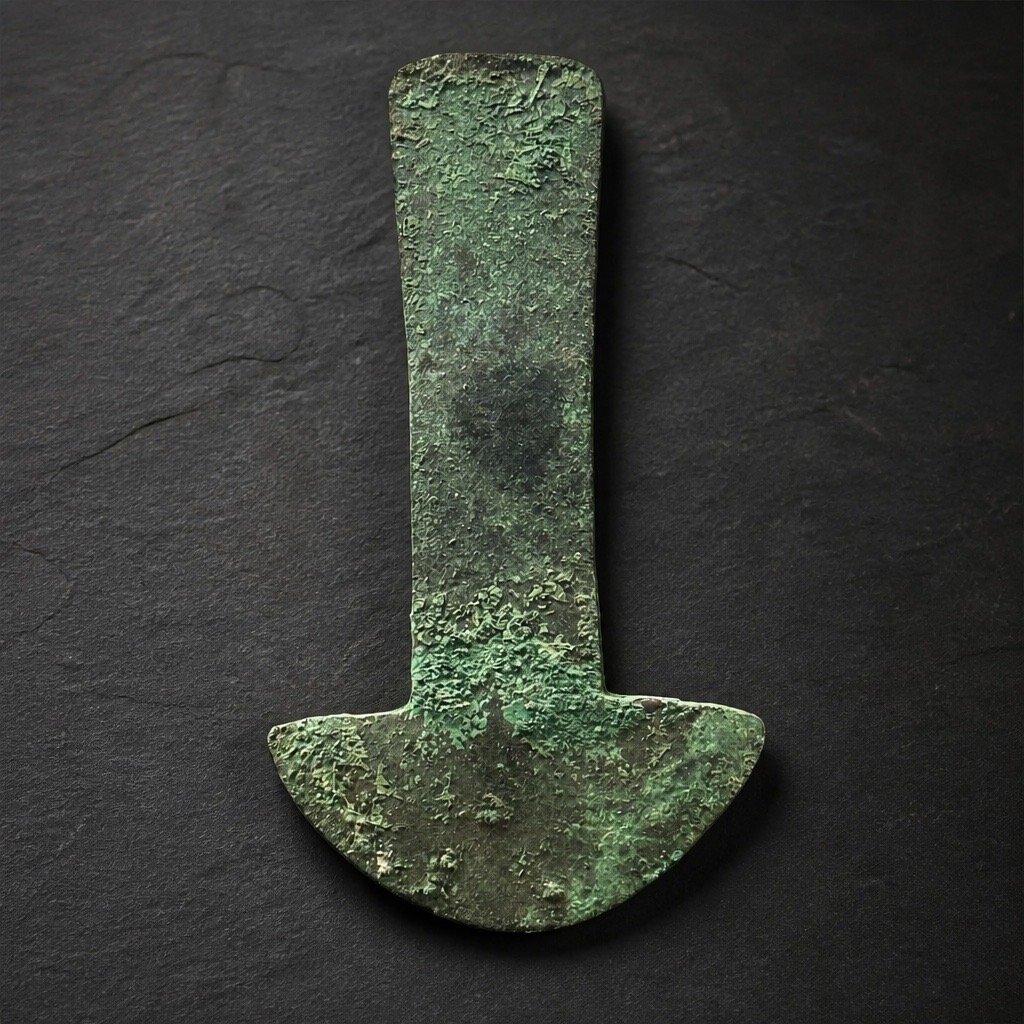
PERUVIAN BRONZE TUMI - CEREMONIAL KNIFE
North Coast Peru, Sican / Late Intermediate Period to Inca, ca. 900 - 1532 A.D.
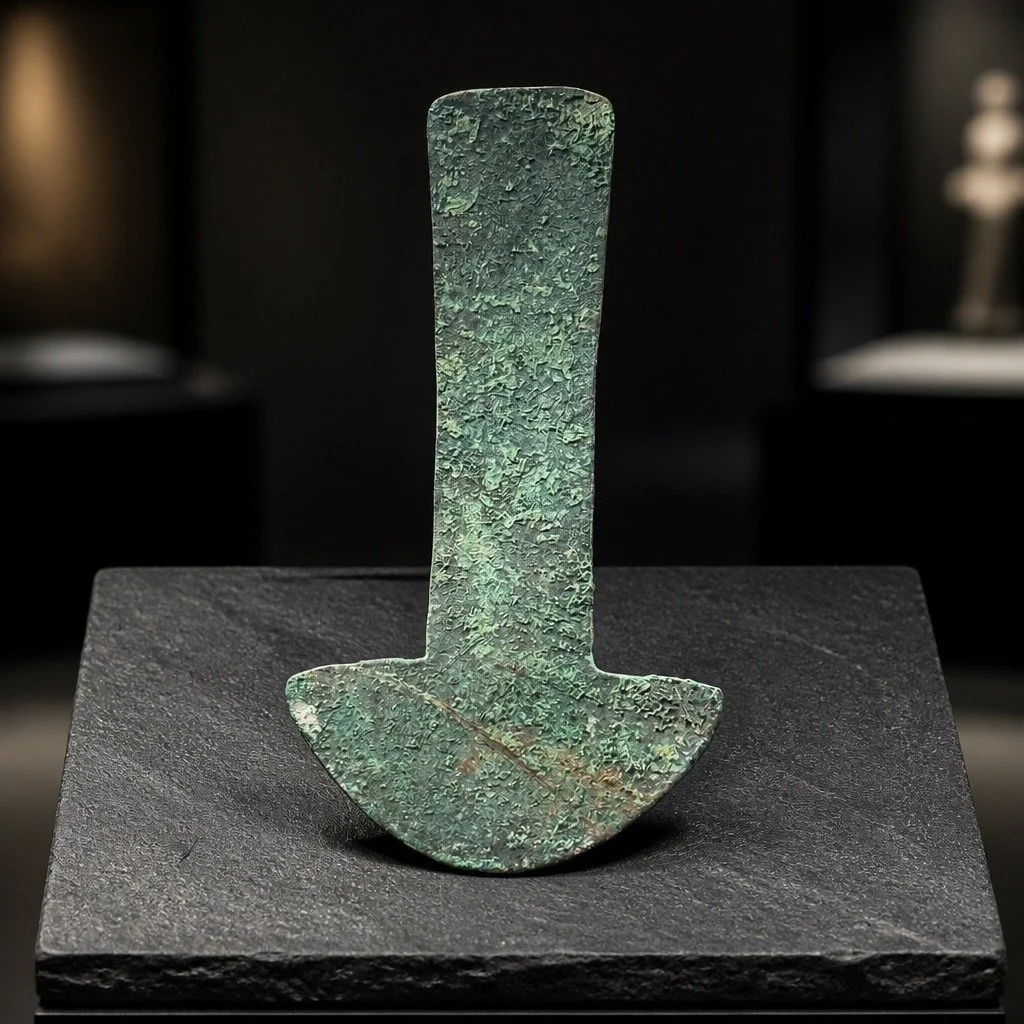
A ceremonial Tumi knife cast in a single piece of copper-bronze. Comprising a long rectangular tang / handle and a broad, lunate, crescent-shaped blade set perpendicular to it - the classic emblematic form of the Andes.
Covered entirely with a thick, superbly preserved mottled emerald-green to dark green cuprite and malachite patina, with areas of reddish-brown cuprite. The cutting edge is preserved.
The Tumi was a highly symbolic instrument in ancient Peru, used in state ceremonies, ritual sacrifice, and remarkably, for cranial surgery (trepanation) by Andean cultures from the Moche to the Inca Empire. This example shows the iconic, highly stylized minimalist form prized by collectors.
A sculptural object with museum-quality patina, beautifully displayable standing on its blade as photographed.
Culture: Andean, North Coast Peru - Sican (Lambayeque) to Inca
Period: ca. 900 - 1532 A.D.
Material: Copper-bronze with heavy green patina
Dimensions:
Height: 12.6 cm / 4.96 inch
Blade width: 7.0 cm / 2.76 inch
Condition: Intact, excellent encrusted patina. Fine stable fissure to blade as made / from age, otherwise choic
Price € 75,—
The Tumi is an ancient Andean ceremonial knife characterized by a distinct crescent-shaped blade and an ornate, vertical handle.
Originating in pre-Colombian Peru, it transformed from a functional cutting tool into one of the most significant symbols of religious power,
elite status and advanced metallurgy in the ancient world