Oil Lamp 001
Size: 11 x 8 cm
Period: Egypt/Roman, 50- 200 AD
Condition: Slightly worn
Provenance: Collection Tyko Ringblom (1923-2018).
Price € 225,—
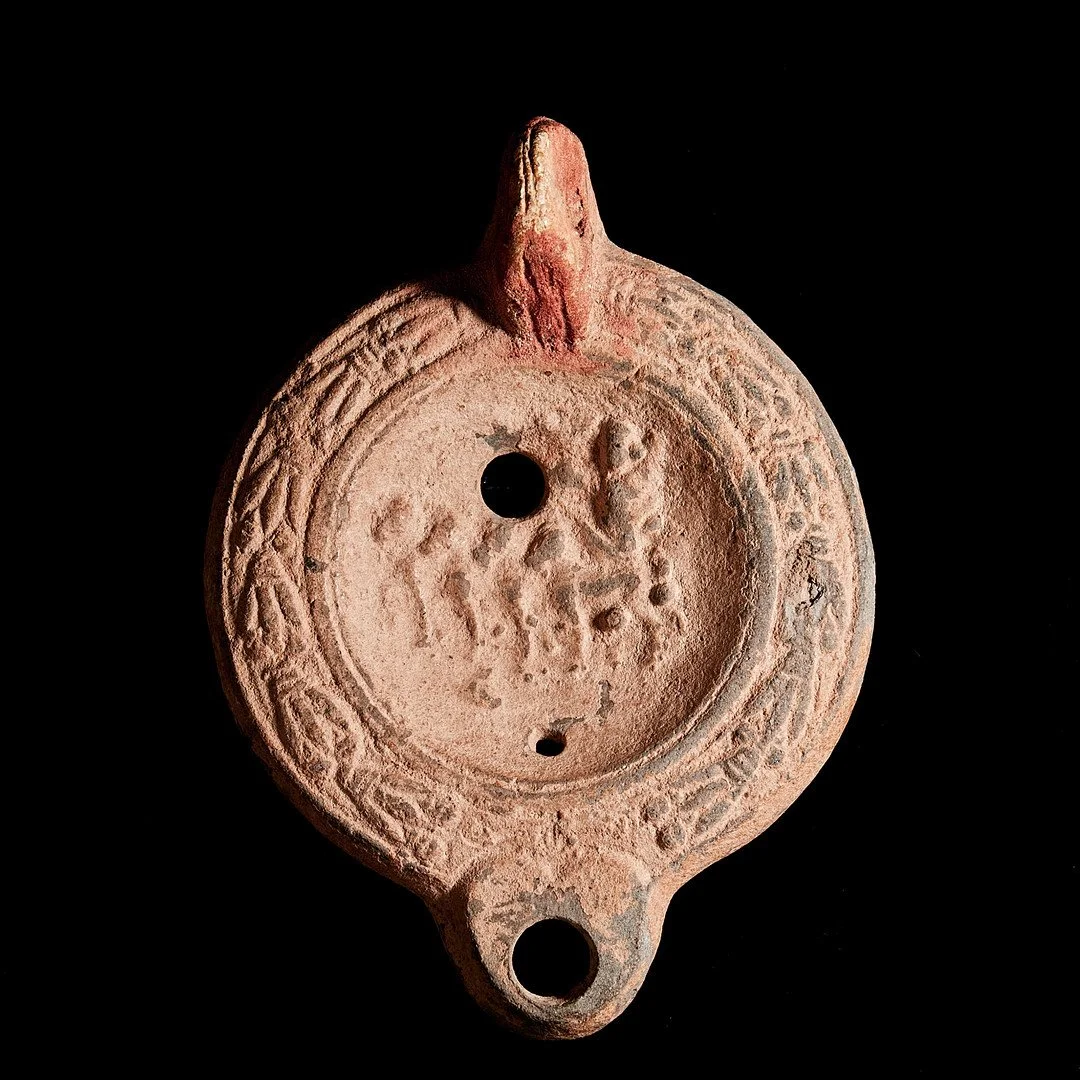
Roman Oil Lamp with charioteer composition
The lamp has a rounded, disk-shaped body with a slightly raised central field (the discus), surrounded by a decorative border made up of repeating geometric or vegetal motifs. These molded designs are typical of Roman lamps from the early Imperial period, when mass production using clay molds allowed both decoration and standardization.
At the top is the nozzle, where the wick would have emerged. The area around it is darkened and reddened, showing soot and burning, clear evidence that the lamp was actually used. In the center of the lamp is a filling hole, through which olive oil would have been poured. A second, smaller vent hole appears below it, helping air circulate so the flame could burn steadily.
At the bottom is a rounded handle or lug with a pierced hole. This allowed the lamp to be hung from a hook or cord, or possibly carried. The clay surface is worn and pitted, showing its age and long burial in the ground.
The central design inside the discus is now heavily eroded, but faint raised shapes suggest it once depicted a Charioteer scene ( Quadriga) , which was common on Roman lamps.
Overall, this lamp is a good example of how Roman oil lamps combined practical function and decorative art. It would have provided soft, flickering light in a Roman home while also reflecting the visual culture and beliefs of the people who used it nearly two thousand years ago.