Oil Lamp 003
Size: 9,4 x 7 cm
Period: Roman Empire, 100- 300 AD
Condition: Slightly worn
Provenance: Collection Bjarte Rekdal (b 1935)
The items were acquired in Tunisia between 1965-1966 and brought to Sweden
Price € 250,—
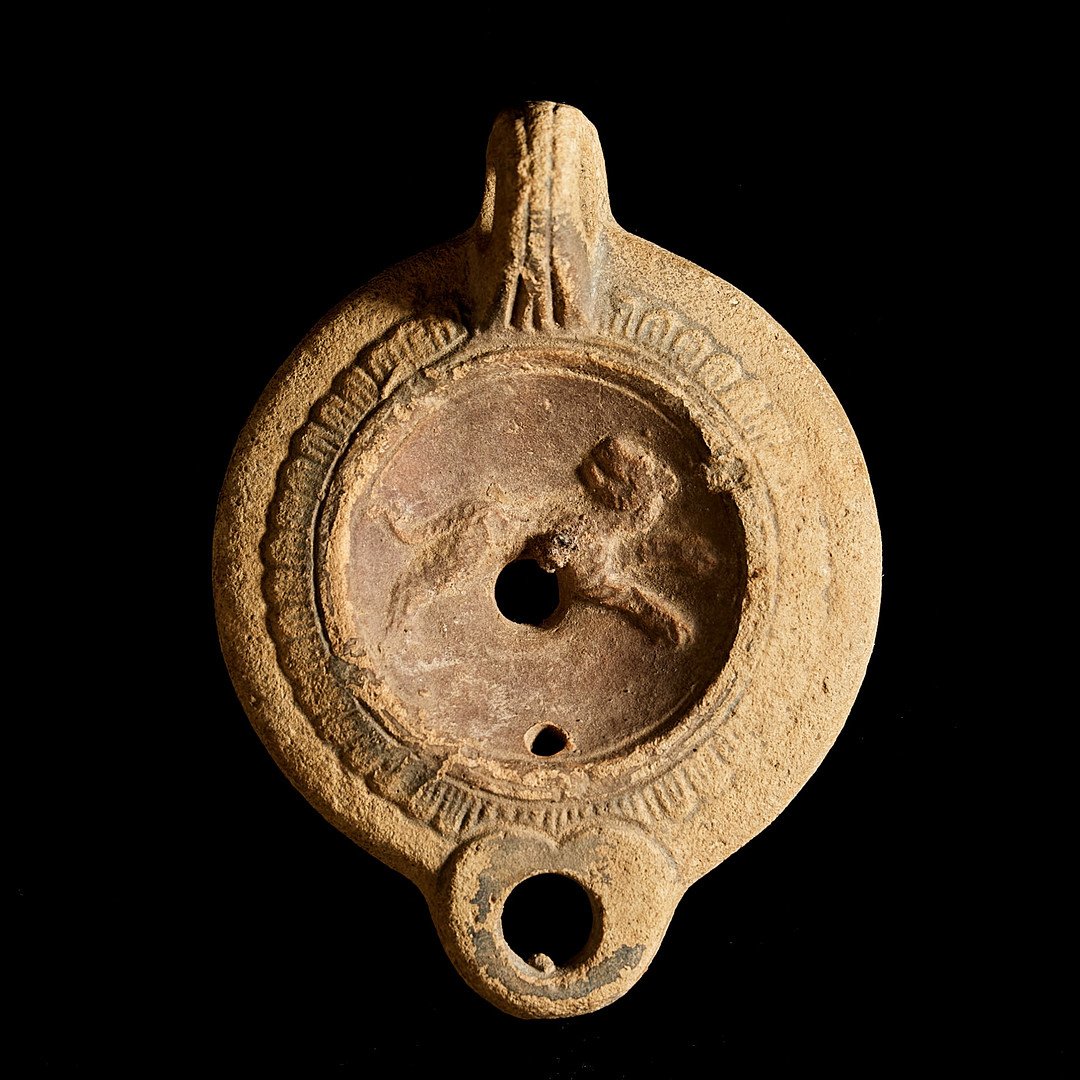
Roman Oil Lamp with hunting hound
an ancient terracotta oil lamp, produced in a molded ceramic fabric and finished with a light slip, typical of lamps from the Roman and Late Hellenistic periods.
The lamp has a rounded, disk-shaped body with a central filling hole and a projecting nozzle at the top where the wick would have emerged. A second circular opening at the bottom indicates either a secondary air hole or a broken suspension or handle point, suggesting it may originally have been designed for hanging or for mounting on a stand. The surface shows clear signs of long burial: encrusted soil, wear, and softened edges.
At the center of the lamp is a molded relief of an animal, most likely a dog, a hunting hound, depicted in profile with legs extended as if in motion. Animal imagery on oil lamps was common in the Roman world and often carried symbolic meaning, such as speed, protection, hunting, or loyalty, depending on the species. The figure is enclosed within a circular medallion, which is surrounded by a decorative raised border with a repeating notched or beaded motif.
The lamp’s overall form, a discus (central image field), ornamental rim, and elongated nozzle, is characteristic of Roman Imperial lamps (approximately 1st–3rd century CE). These lamps were mass-produced using molds, which allowed detailed imagery like this animal scene to be replicated widely and cheaply.
In antiquity, such a lamp would have been filled with olive oil and used to illuminate a domestic interior, shrine, or workshop. The animal motif suggests it may also have carried a protective or symbolic function, making it not just a utilitarian object but one with cultural and possibly ritual meaning.
This motif is very common on Roman oil lamps. Dogs—especially running hounds—were associated with:
• Hunting and sport
• Protection of the household
• Loyalty and vigilance
• In some contexts, guidance of the soul
The pose shown here—a hound in pursuit—is a standard Roman visual formula used in mosaics, gems, and lamps from the 1st–3rd centuries CE. The fact that the dog is shown mid-stride inside a medallion is exactly how Roman mold-made lamps presented hunting imagery.