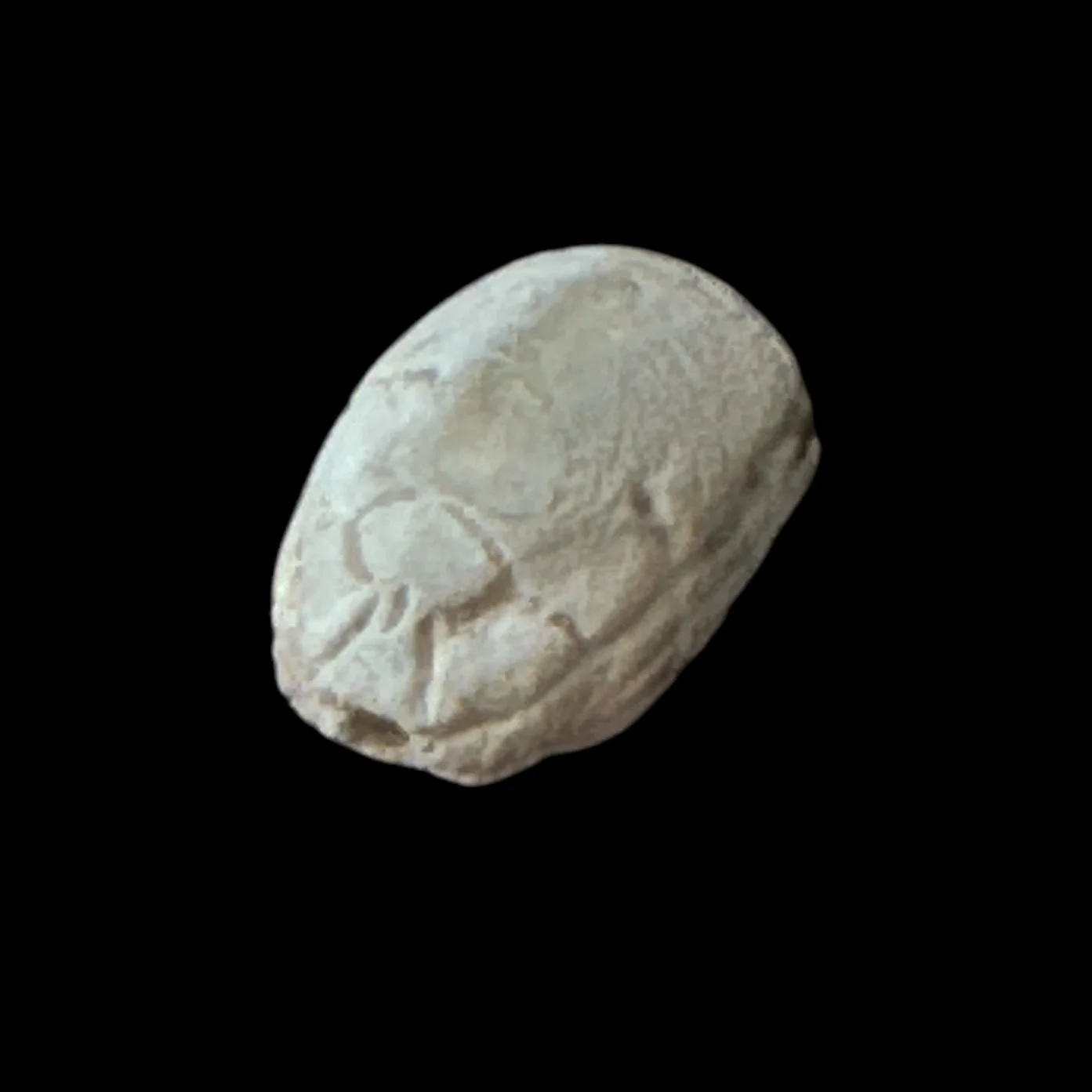
Ancient Egyptian Scarab

Material: Staetite
Size: 1,7 cm
Provenance: Paul S. Forbes collection, acquired 1970’s - 1980’s.
Price € 200, —
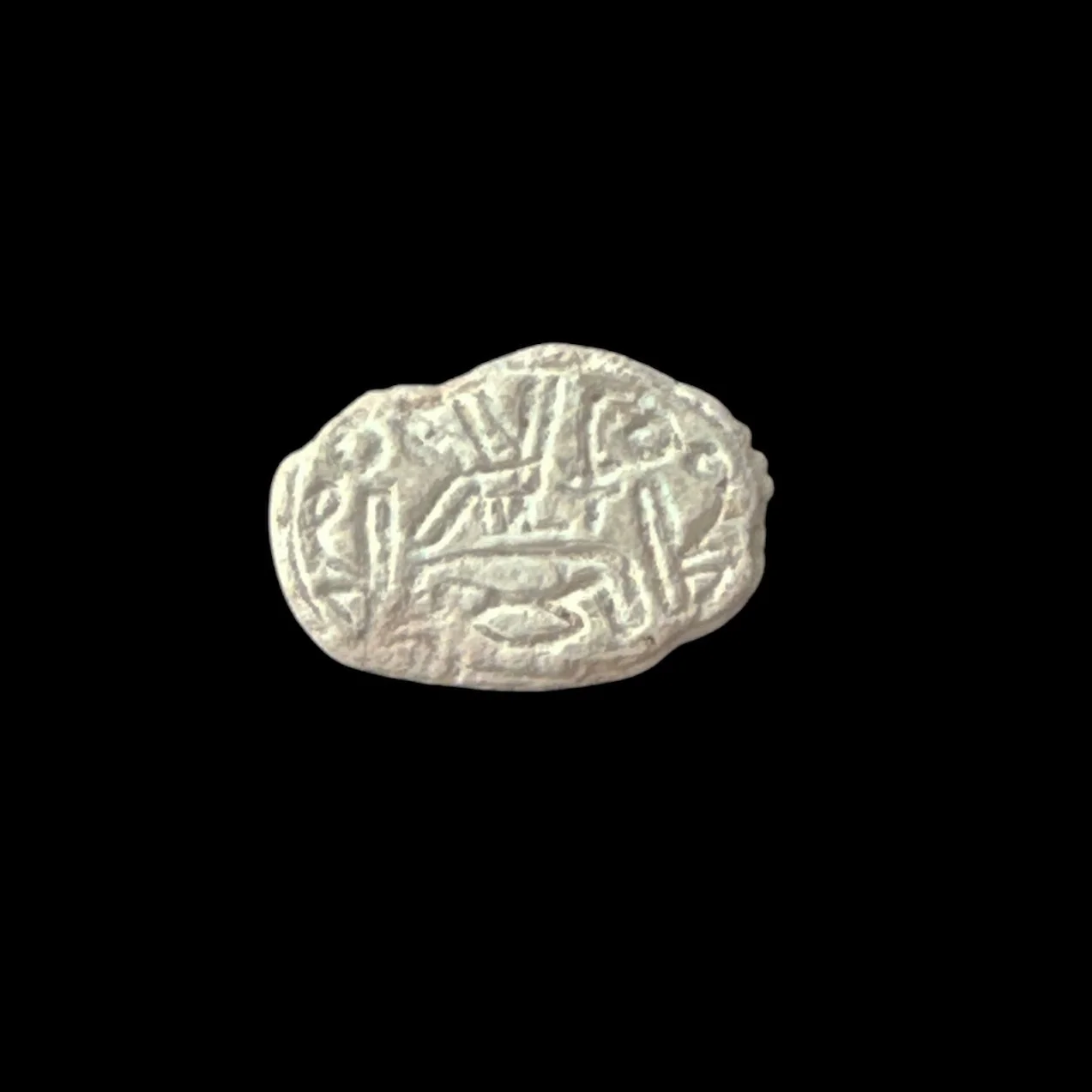
Ancient Egyptian Scarab Seal (Inscribed Base)
This scarab features a flattened oval base carved in a light, buff-colored stone with a matte, weathered surface. The edges are softly rounded, and the carving shows moderate abrasion consistent with age and burial conditions.
Material and Form:
The piece appears to be fashioned from a pale steatite or similarly soft stone, likely once glazed, though no visible traces of glaze remain. The underside is slightly irregular in outline, suggesting hand-carving rather than later mechanical shaping. The base is encircled by a faint raised border that frames the engraved design.
Inscription and Design:
The underside bears a compact arrangement of hieroglyphic signs in sunk relief. The composition appears symmetrically organized around a central horizontal element. Visible signs include linear and curved motifs characteristic of personal names or short commemorative formulas. The carving is shallow but deliberate, with strokes that vary slightly in depth, reflecting manual incision with a fine tool.
Although surface wear softens some details, the inscription remains legible enough to suggest it functioned as a seal. When pressed into clay or wax, the raised hieroglyphic forms would produce a clear impression.
Function and Context:
Scarabs of this type served both amuletic and administrative purposes. They were often pierced longitudinally for suspension or mounting in a ring. As seals, they identified ownership, authenticated goods, or conveyed protective or auspicious inscriptions. Symbolically, the scarab beetle was associated with regeneration and the solar cycle, reinforcing its protective role in daily life and burial contexts.
Condition:
The object exhibits general surface wear, softened edges, and minor abrasions but remains structurally intact. The inscription, though worn, retains its compositional clarity.
Overall, this piece represents a typical inscribed scarab seal, combining symbolic imagery with practical sealing functionality within the material culture of ancient Egypt.