
Ancient Egyptian Scarab
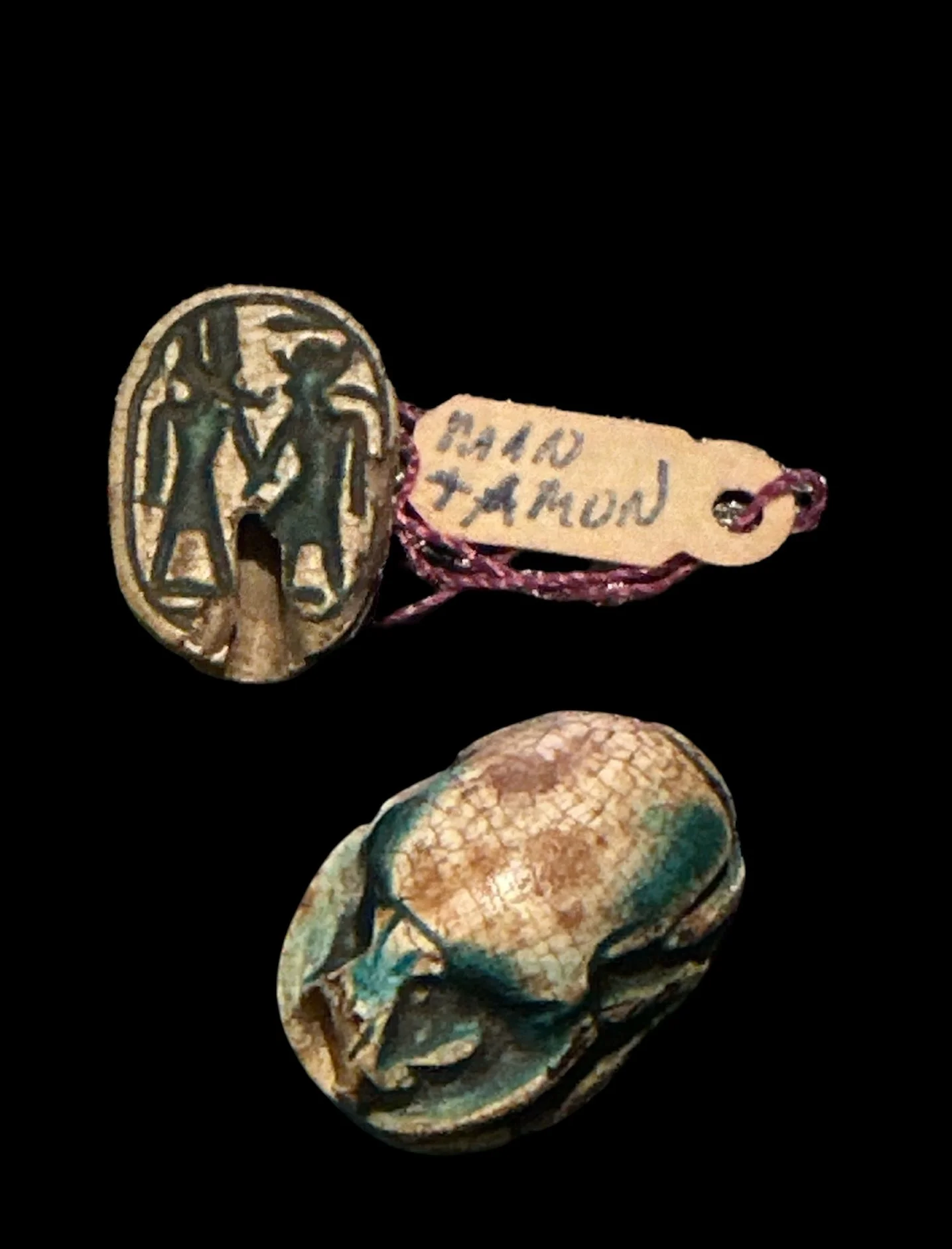

Material: Steatite
Size: 1,4 cm
Provenance: Donald Wonder (1938-2023), California & New Jersey, U.S.A. thence by descent.
Price € 200,—
This Ancient Egyptian scarab amulet is a classic example of New Kingdom religious art, likely dating to the 18th or 19th Dynasty (c. 1550–1189 BCE). Made of glazed steatite and measuring 1.4 cm, it served as a powerful talisman of divine protection and royal legitimacy.
Iconography & Symbolism
The flat base of the scarab features a deeply incised scene of high religious significance:
The Figures: On the left stands the god Amun-Ra, identifiable by his characteristic tall, double-plumed crown. He faces the Pharaoh (on the right), who is depicted in royal regalia.
The Gesture: The two figures are shown joining hands. This specific motif represents the "investiture" or divine endorsement of the King. It symbolizes Amun leading the Pharaoh and granting him the "breath of life" and the authority to rule Egypt.
The Beetle Back: The convex side is carved naturalistically to represent the Scarabaeus sacer. The remnant of blue-green glaze connects the object to Khepri, the god of the rising sun and eternal renewal.
