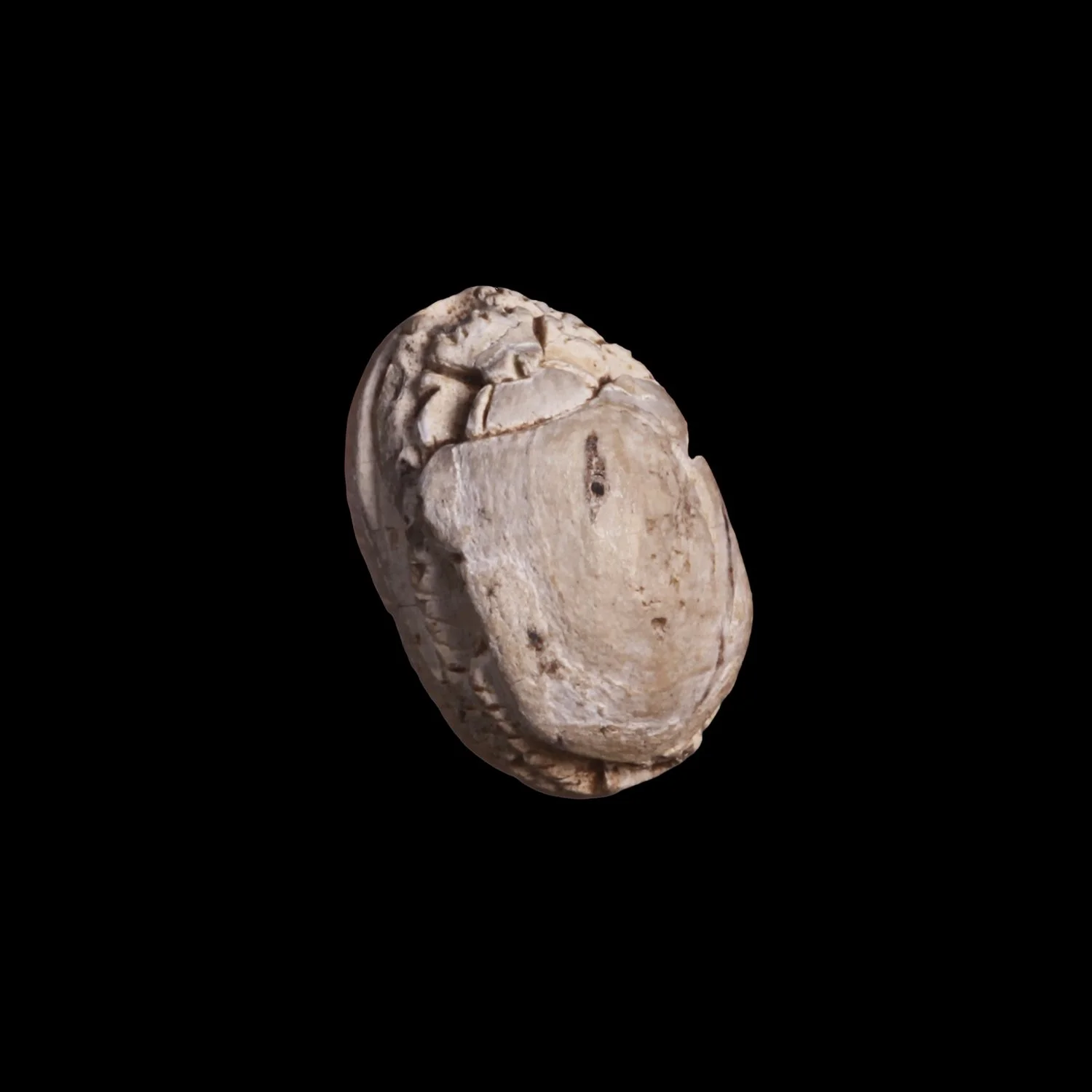
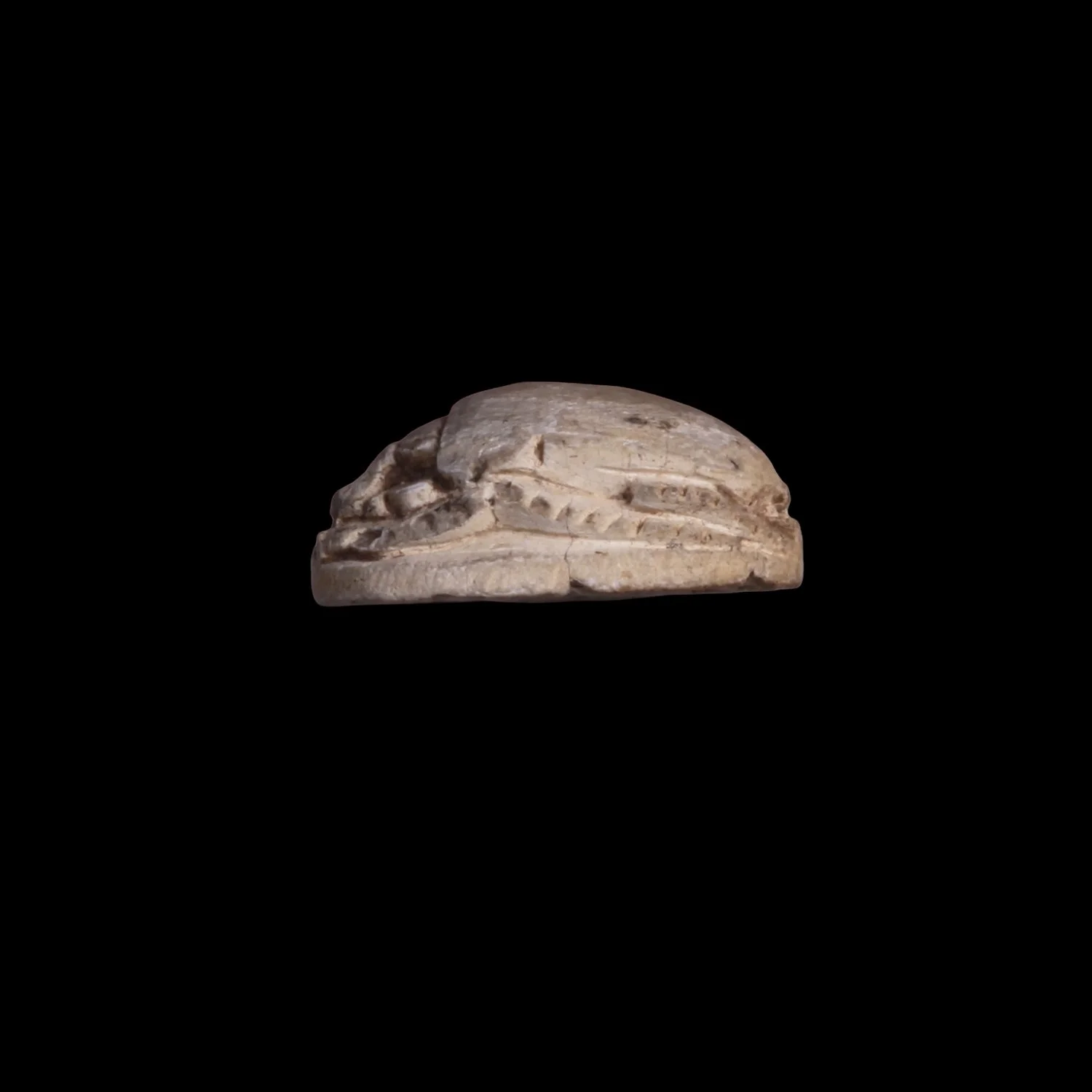
ANCIENT EGYPTIAN STEATITE SCARAB AMULET
An exceptional example of a protective personal talisman from the Second Intermediate Period, displaying the highly stylized, symmetrical iconography characteristic of Delta workshops.
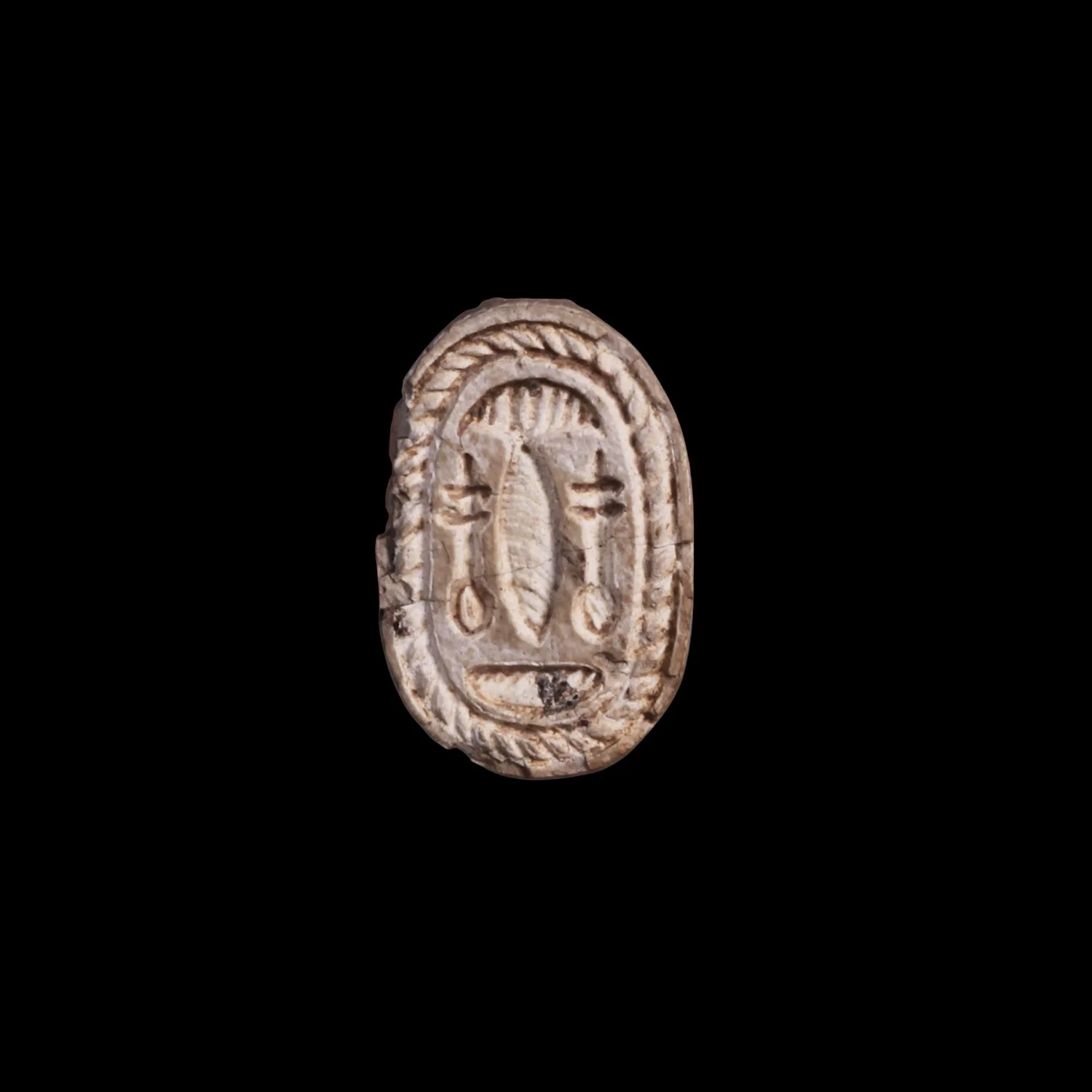
The incised oval base is framed by a deeply carved, continuous twisted rope border. The central composition is anchored at the base by a prominent Neb basket hieroglyph (𓎙), meaning "all" or "lordship." Rising from the basket is a central Wadj papyrus pillar (𓇅), its flared flowering umbel terminating just beneath a hatched semicircular sun-ray motif at the apex. This central column of flourishing youth and vitality is flanked symmetrically by two vertical Nefer hieroglyphs (𓄤), symbolizing "beauty," "goodness," or "perfection."
Together, the glyphs form a potent cryptographic visual formula wishing the owner "all flourishing growth and goodness."
Period: Second Intermediate Period (c. 1700–1550 BCE)
Dynasty: 13th–15th Dynasty
Material: Glazed steatite (soapstone)
Dimensions: 1.7 cm × 1.2 cm
Condition: Fine; features minor age-related chipping along the left peripheral border with a naturally weathered, cream-colored surface and distinct soil deposits retaining the deep incisions.
Provenance: Freeman’s Auction house, Harmer Rooke NY 1984
Artifact number TG 0013
Price € 250,—