Shabti of Padipepet
Saite Period, Dynasty 26, probably Saqqara, c. 600–525 BCE
Faience
Height: 12.7 cm
Provenance: Former collection of Michele Yoyotte; accompanied by French passport documentation.
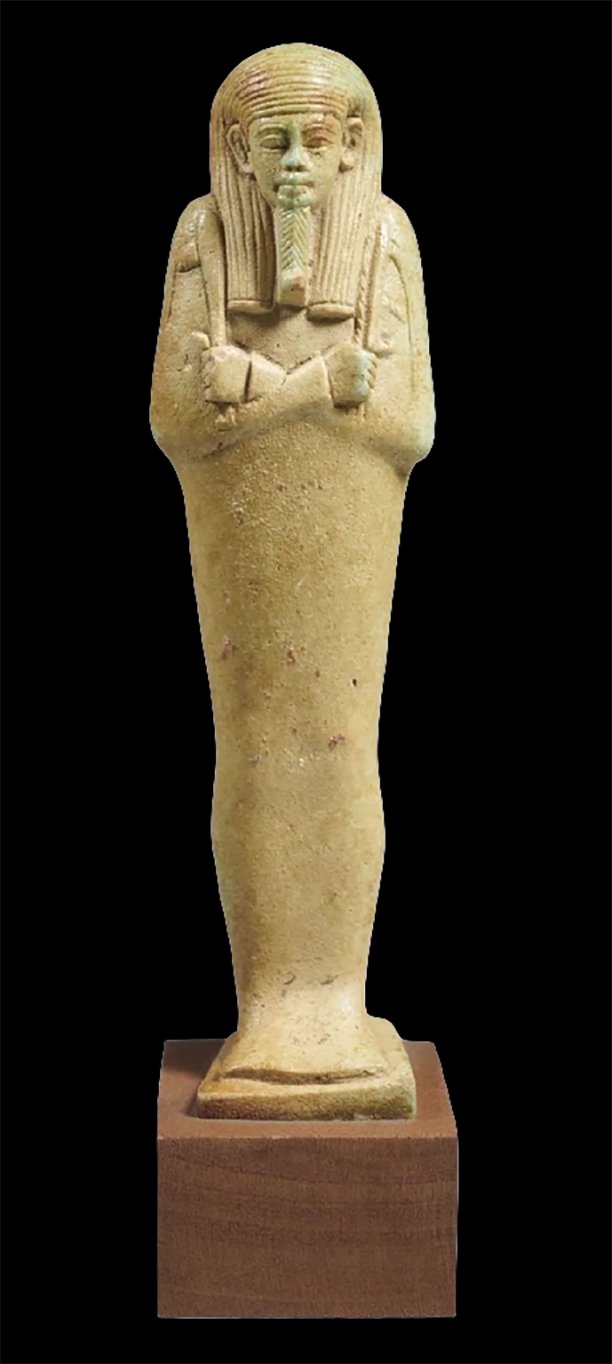
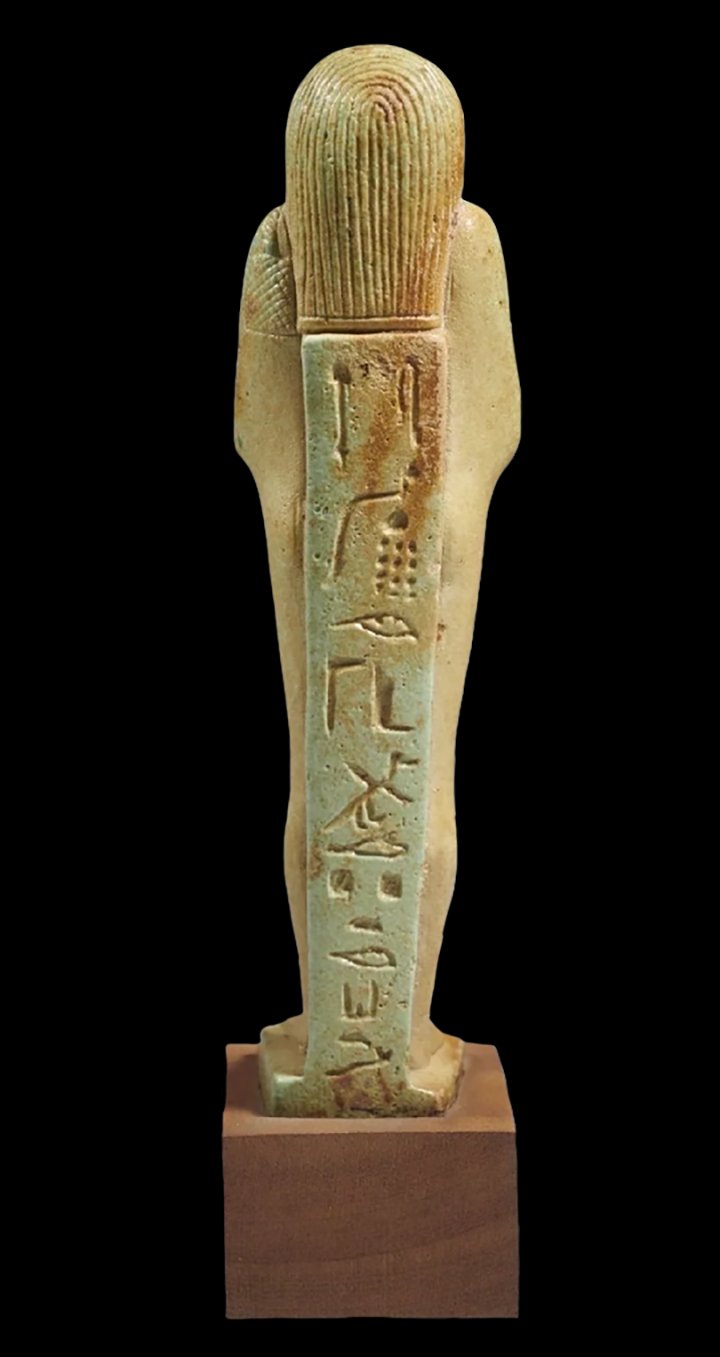
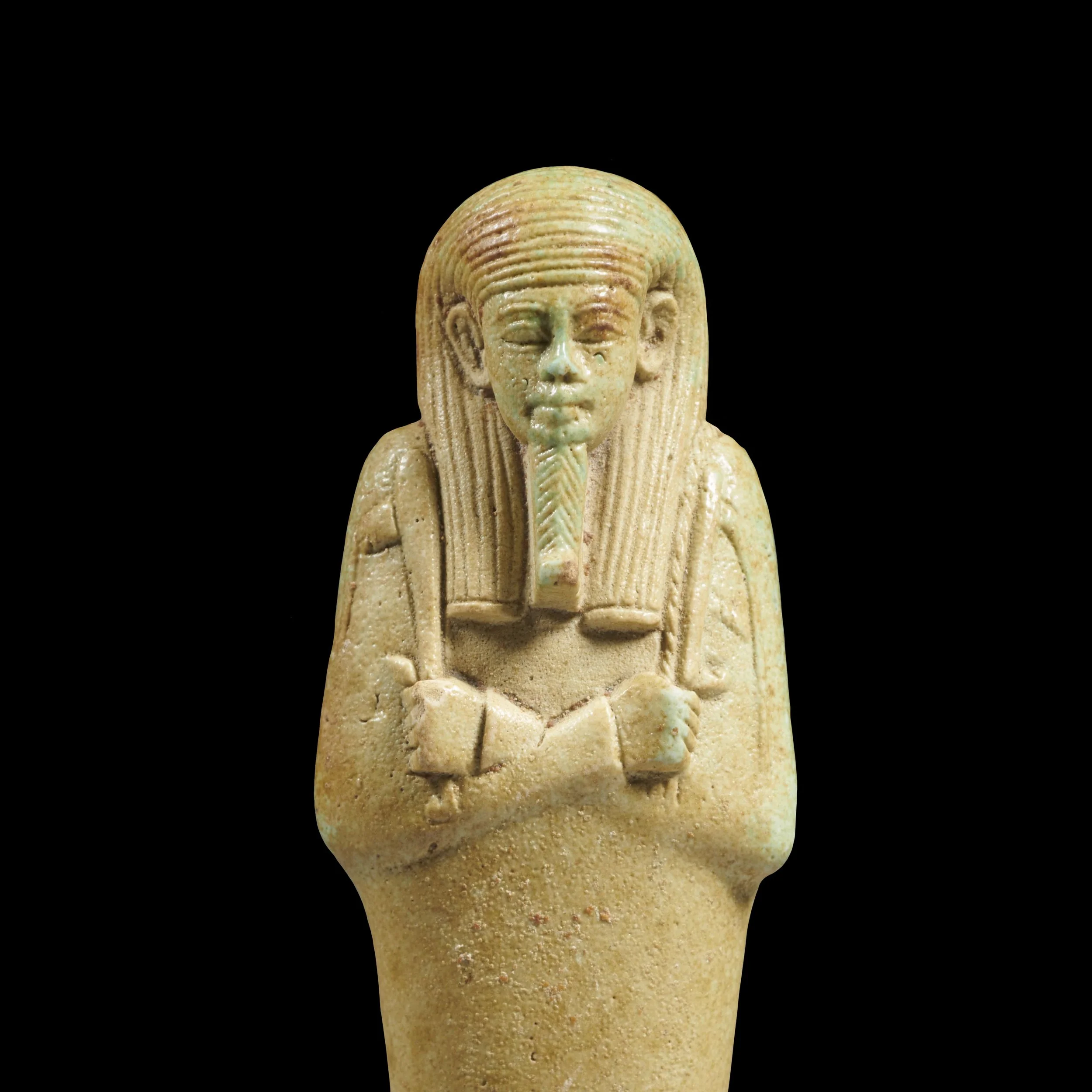
Finely modeled pale green faience shabti of Padipepet, represented in mummiform guise with crossed arms holding agricultural implements, wearing a finely striated tripartite wig and standing on an integral plinth. A single vertical hieroglyphic column is inscribed on the dorsal pillar with an abbreviated form of the Chapter 6 shabti spell,
Transliterated:
Sḥḏ Wsir Pꜣ-di-ppt [r] ir(.t) kꜣt.f
Translation:
“The illuminate, the Osiris Padipepet is summoned to perform his work …”
This confirms the figure as a canonical worker ushabti rather than merely a named funerary statuette, and securely places it within the Saite funerary tradition.
Typologically the piece belongs to the refined Saqqara workshop tradition represented in Schneider’s corpus and closely parallels published shabtis of Padipepet in the British Museum and the Art Institute of Chicago. The present figure may plausibly be assigned to this same dispersed corpus and likely derives from the owner’s original canonical funerary assemblage of 401 shabtis.
Particularly notable are the elegant proportions, fine mold work, clear inscription, and the secure identification of the owner through the preserved shabti spell. A highly attractive and academically significant example with distinguished provenance from the collection of Michele Yoyotte.
Price € 9.500,—