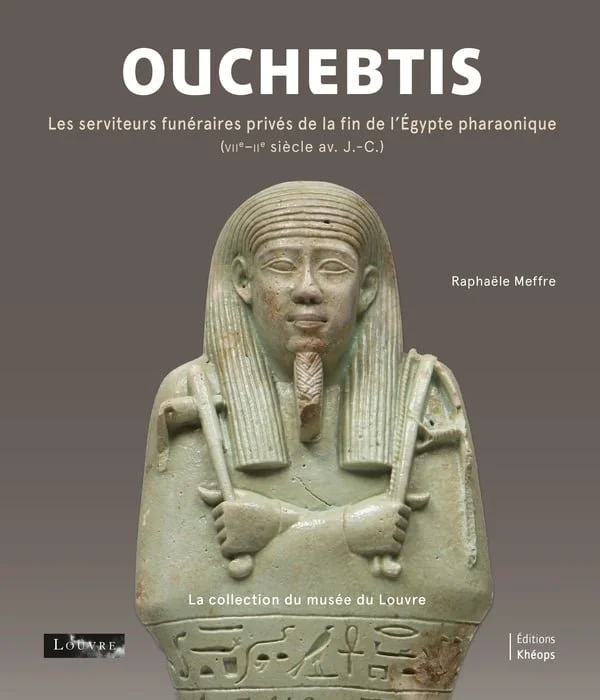
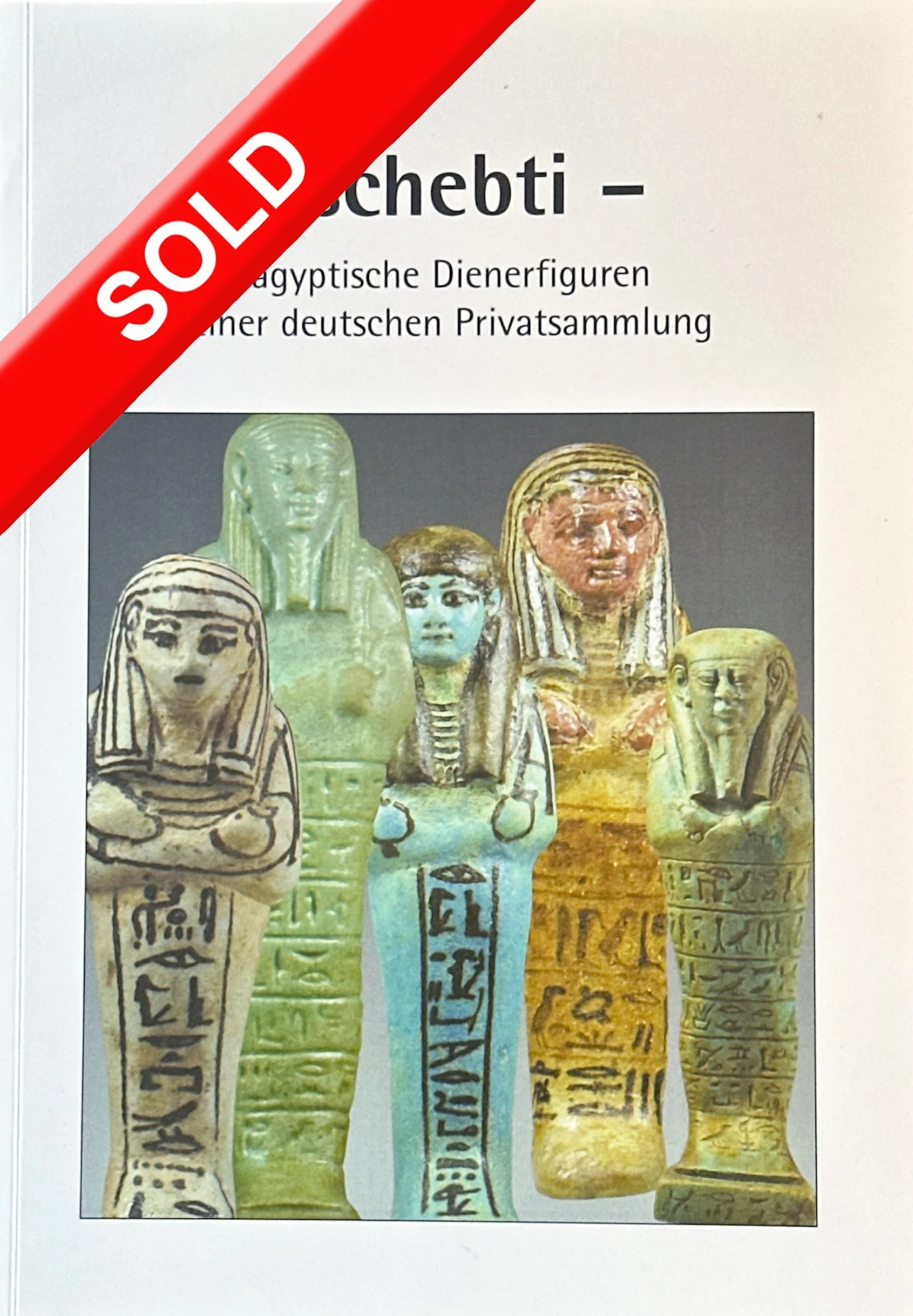
Books about Shabtis, Ushabtis or Oushabtis
The shabti was an ancient Egyptian funerary figurine. The Egyptological term is derived from the Egyptian word 𓅱𓈙𓃀𓏏𓏭𓀾 wšbtj, which replaced earlier 𓆷𓍯𓃀𓏏𓏭𓀾 šwbtj, perhaps the nisba of 𓈙𓍯𓃀𓆭 šwꜣb (persea tree).
Ushabtis were placed in tombs among the grave goods and were intended to act as servants for the deceased, should they be called upon to do manual labor in the afterlife. The figurines frequently carried a hoe on their shoulder and a basket on their backs, implying they were intended to farm for the dead. They typically featured hieroglyphic writing on the legs.They carried inscriptions asserting their readiness to answer the gods' summons to work.
The practice of using ushabtis originated in the Old Kingdom of Egypt (c. 2600 to 2100 BC), with the use of life-sized reserve heads made from limestone, which were buried with the mummy. Most ushabtis were small, and many produced in multiples – they sometimes covered the floor around a sarcophagus. Exceptional ushabtis are larger, or were produced as a unique masterwork.
Ushabtis were produced in large quantities throughout Egyptian eras. Alongside scarabs, they rank among the most common ancient Egyptian artifacts.